
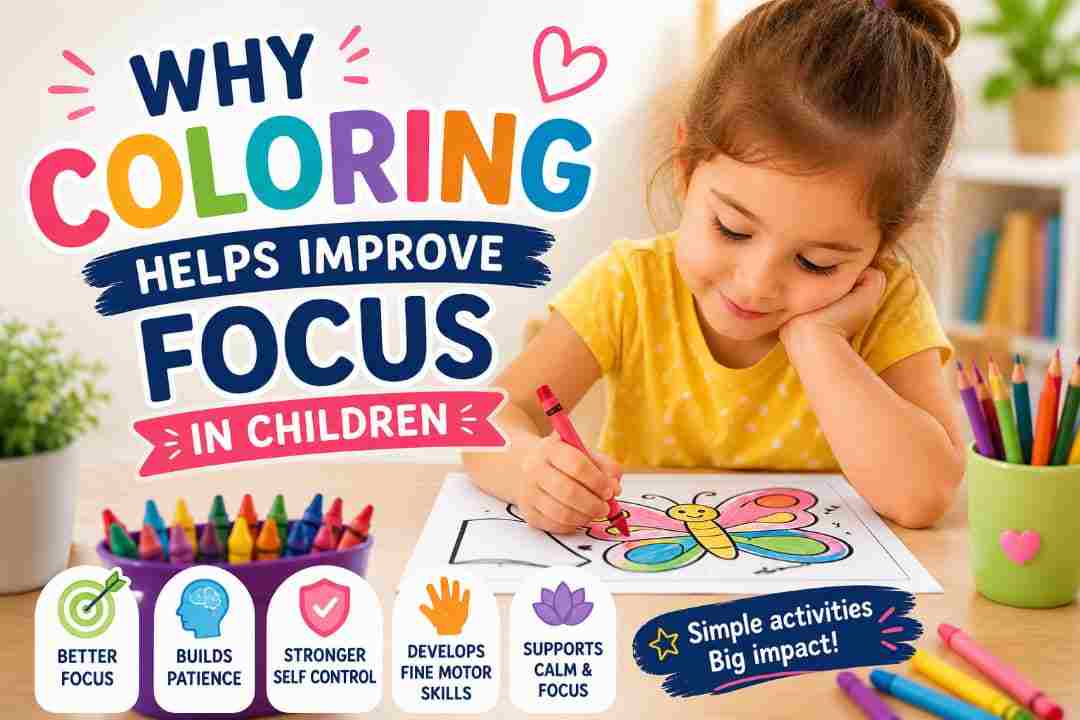
- Coloring gives children one simple task to stay with.
- It helps them practice patience and slower thinking.
- It supports self control and careful hand movements.
- It strengthens fine motor skills that help with school work.
- It creates a calm, screen free way to build focus.
Coloring may look like a simple play activity, but it can do something quite powerful for children. It gives them a quiet, enjoyable way to slow down, pay attention, and stay with one task for a little while.
That is one reason parents, teachers, and caregivers keep coming back to it. It does not feel heavy or complicated, yet it supports important skills in a natural way. A child does not have to sit through a lesson or follow a long set of instructions. They just pick up a crayon, look at the page, and begin.
In a world full of fast moving screens and constant distractions, coloring offers something different. It creates a small pocket of calm where children can focus, think, and finish something on their own. And honestly, that matters more than many people realize.
So why does coloring help children focus so well? Let us take a closer look.
What Focus Means for Children
When adults talk about focus, they usually mean paying attention to one thing without getting pulled in ten different directions. For children, focus works in a similar way, but it is still a skill they are learning.
A young child may only be able to stay with one activity for a short time, and that is completely normal. They are still learning how to concentrate, how to ignore distractions, and how to finish what they start. That is why simple activities matter so much.
Coloring gives children a clear and manageable task. They can see what they are supposed to do, and they can move at a pace that feels comfortable. There is no pressure to be perfect. There is only the chance to keep going, one section at a time.
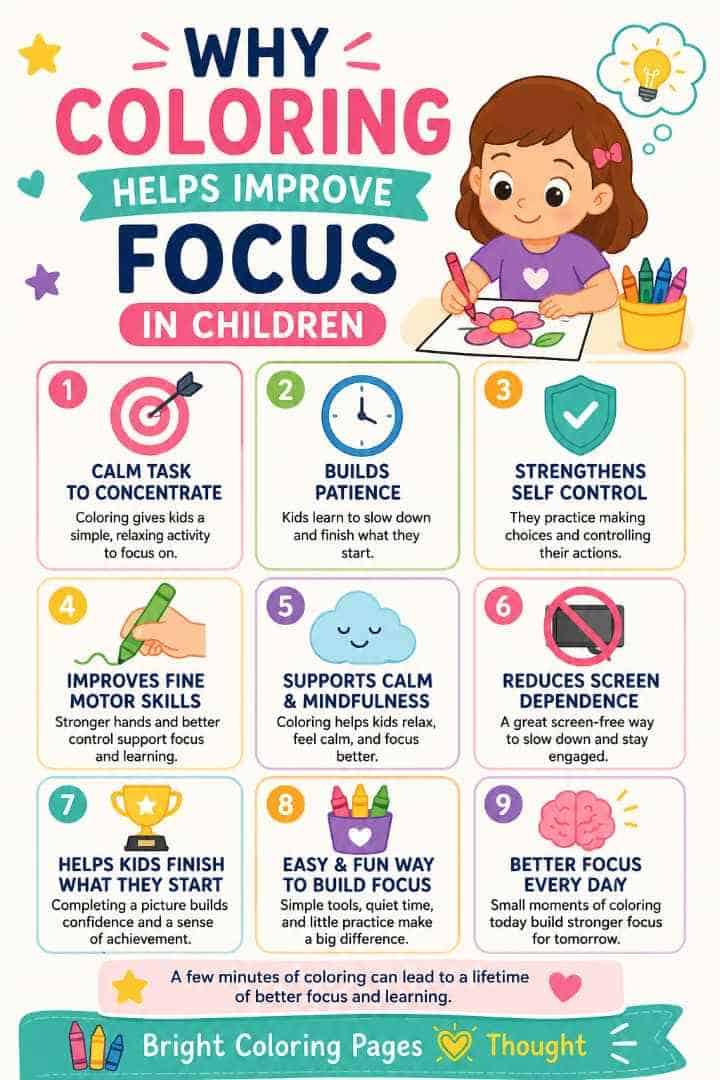
Coloring Gives Children a Calm Task to Concentrate On
One of the biggest reasons coloring helps focus is that it is calm and structured. Children do not have to solve a big problem or make a lot of decisions at once. They just need to choose colors and fill in the page.
That simple structure is helpful because it reduces overwhelm. When children feel overloaded, it becomes harder for them to concentrate. Coloring gives them something steady and familiar to hold onto.
It also gives the brain a single task to follow. Instead of jumping from one idea to another, a child can look at one page and stay with it for a while. That kind of steady attention is excellent practice for longer focus later on.
Coloring Helps Build Patience
Focus is not only about paying attention. It is also about patience. Children need practice learning how to slow down, wait, and work through something without rushing.
Coloring naturally encourages that. A child has to stay with the page long enough to fill it in. They may need to decide which part to color next, which color to use, and how to keep going until the picture is finished.
That process teaches patience in a very gentle way. It does not feel like a lecture or a strict rule. It feels like play. And that is exactly why it works so well.
For children who are easily restless, coloring can be a helpful way to practice slowing down without stress. They learn that not everything has to happen instantly.
Coloring Strengthens Self Control
Self control plays a huge role in focus. When children color, they are practicing how to guide their hands, stay within spaces, and avoid rushing through the page.
Even small choices help build this skill. Should they use one color or many? Should they finish one section first or jump around the page? These little decisions help children become more aware of their actions.
That kind of control matters in daily life too. A child who learns how to stay steady with a coloring page is also practicing how to stay steady during other tasks, like writing, drawing, or classroom activities.
So yes, coloring may look like a simple art activity, but it is quietly teaching important life skills.
Coloring Improves Fine Motor Skills, Which Support Focus
The hands and brain work closely together during coloring. When children hold crayons, markers, or pencils, they are building the small hand muscles needed for control and precision.
That matters because fine motor skills make a task feel easier. If a child struggles too much with holding the tool or moving it across the page, they may lose interest quickly. But when their hands become stronger and more coordinated, they can focus more easily on the picture in front of them.
This is one reason coloring is often linked to school readiness. It helps prepare children for writing, cutting, drawing, and other tasks that require attention and control.
The more comfortable a child feels with the physical side of coloring, the easier it becomes for their mind to stay focused on the activity itself.
Coloring Supports Calm and Mindfulness
Children focus better when they feel calm. That may sound obvious, but it is very true. A busy, upset, or overstimulated child often finds it hard to settle down long enough to concentrate.
Coloring can help create that calm. The slow, repeated motion gives children something soothing to do with their hands. The page gives them a clear place to put their attention. The whole activity feels safe, predictable, and peaceful.
That is why coloring can be a great choice after a long school day, during quiet time, or before bed. It helps children shift from high energy to a calmer state.
And when the body settles, the mind often follows.
Coloring Can Reduce Screen Dependence
Many children spend a lot of time on screens. Tablets, phones, and television can be entertaining, but they often encourage quick changes and fast stimulation. That can make it harder for children to sit still with one activity for long.
Coloring offers a different experience. It slows things down. It invites children to use their hands, stay with one task, and pay attention in a more grounded way.
This makes coloring a wonderful offline option for parents who want a quieter activity that still feels fun. It is simple, affordable, and easy to use anywhere. You do not need much to get started, which is part of its charm.
Sometimes the best break from screen time is something old fashioned and hands on.
Coloring Helps Kids Finish What They Start
Focus is also about follow through. A child who begins a task and sees it through to the end is building an important habit. Coloring helps with that too.
A coloring page has a clear beginning, middle, and end. The child starts with an unfinished picture, works through it, and ends with something complete. That gives them a real sense of progress.
Children feel proud when they finish something themselves. That feeling of accomplishment can build confidence and encourage them to try again next time.
It is a small victory, but small victories matter.
Easy Ways to Make Coloring Even Better for Focus
You do not need anything fancy to make coloring helpful. In fact, keeping it simple often works best.
For younger children, use pages with larger shapes and fewer details. That makes the activity feel easier and less frustrating. For older kids, more detailed pages can offer a longer challenge and help stretch their attention.
It also helps to create a calm space. A quiet corner, a small table, or even a blanket on the floor can work well. Try offering only a few crayons at a time so the child does not feel overwhelmed by too many choices.
Most of all, keep the mood relaxed. The goal is not perfect coloring. The goal is steady attention, enjoyment, and practice.
Conclusion
Coloring helps children improve focus because it gives them something calm, clear, and rewarding to do. It encourages patience, strengthens self control, builds fine motor skills, and supports emotional calm. It also gives children a screen free way to practice staying with one task and finishing what they start.
That is a lot of value from one simple activity.
So the next time a child picks up a crayon, remember that they are doing more than making a pretty picture. They are learning how to slow down, concentrate, and stay engaged. And sometimes, the quietest activities do the most important work.
FAQs
Coloring helps children focus because it gives them one clear task that is calm, simple, and easy to follow. It helps them practice attention without too much pressure.
Children can start coloring very early, even as toddlers. Younger children can use simple pages, while older children can work on more detailed pictures.
Even a few minutes can help. Start small, then slowly increase the time as the child becomes more comfortable and interested.
Yes, it can. Coloring supports attention, patience, fine motor control, and task completion, all of which are useful for school.
Simple pages work well for younger children because they are easier to manage. Older children may enjoy more detailed pages that keep them engaged longer.