Affiliate/Disclaimer: This is a safety-first roundup, not a hype list. Every recommendation below is chosen because it shows clear non-toxic, washable, age-appropriate, or safety-tested signals on the official product or manufacturer page. And if you buy using our link, we may get commission.
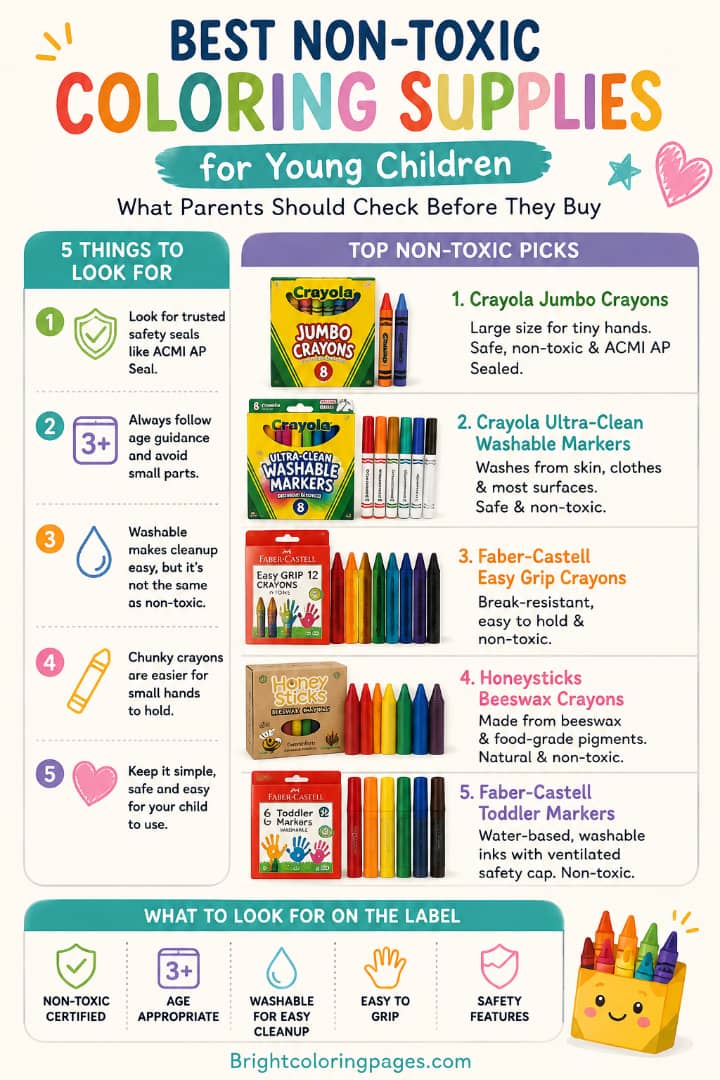
5 Things To Know About Non-Toxic Coloring Supplies For Kids
- “Non-toxic” is not just a marketing word. Look for trusted certification like the ACMI AP Seal, which is used for art materials certified by a toxicological evaluation and labeled to meet relevant art material standards.
- Age matters just as much as the label. For children under 3, avoid small parts and follow age guidance closely because choking, aspiration, and ingestion hazards are a real concern.
- Washable is great, but it is not the same as non-toxic. Washable products make cleanup easier, while non-toxic certification is about material safety.
- Chunky crayons usually beat thin tools for young kids. Large, easy-grip crayons are easier for small hands to hold and less frustrating for first-time colorers.
- The safest choice is the simplest one your child can use correctly. For many young children, that means large crayons first, then washable markers when their fine motor skills improve.
Introduction
Shopping for coloring supplies for young children should feel exciting, not stressful.
But once you start reading product labels, the words can get confusing fast: non-toxic, washable, AP seal, age 3+, ventilated cap, break-resistant, food-grade pigments, and more.
The good news is that you do not need to be a chemist to choose well. You just need to know which safety signals matter most.
In plain English, the safest crayons and safe markers for kids are the ones that combine clear non-toxic labeling, age-appropriate design, and easy cleanup.
For very young children, chunky crayons are usually the easiest and least messy place to start. For preschoolers, washable markers can be a great next step, as long as they are age-rated and supervised.
A Comparison Of Best Non-Toxic Coloring Supplies for Young Children
| Pick | Best For | What Makes It Stand Out | Safety Signal | Cleanup |
|---|---|---|---|---|
| Crayola Jumbo Crayons | Toddlers and early preschoolers | Large size for tiny hands and a classic starter set | Safe and non-toxic; ages 3+; Crayola says its art materials carry the ACMI AP Seal | Low mess, easy grip |
| Crayola Ultra-Clean Washable Markers | Preschoolers and older kids | Washes from skin, most clothing, and many painted surfaces | Safe and non-toxic; ages 3+ | Excellent cleanup for families who want less stress |
| Faber-Castell Easy Grip Crayons | Small hands that need better control | Break-resistant and easy to hold | Non-toxic and safe for little hands; age-appropriate product line | Good for first scribblers and early coloring practice |
| Honeysticks Beeswax Crayons | Parents who want a more natural-feeling option | Beeswax base and food/cosmetic-grade pigments | Non-toxic, with no chemical smell claimed on official pages | Moderate mess, but very child-friendly feel |
| Faber-Castell Washable Markers | Preschoolers ready for markers | Water-based inks and ventilated safety cap | Non-toxic, washable, ages 3+; safety cap designed to reduce choking risk | Easy cleanup from hands and clothing |
A quick note on this table: “Washable” is about easier cleanup. It does not replace non-toxic labeling or age guidance. The safest buy is the one that gives you both: a trusted safety signal and a design your child can use well.
What “Non-Toxic” Actually Means
This is the part many parents skip, but it is the most important part. On art materials, the ACMI AP Seal is the clearest sign to look for.
ACMI says AP-certified products are evaluated by a toxicologist and labeled so they are not expected to contain materials in sufficient quantities to be toxic or injurious for intended use.
ACMI also notes that AP products are generally not a cause for concern if accidentally swallowed, though sensitivities and allergies can still exist.
That is why “non-toxic” should never be your only buying filter. The package should also match your child’s age and skill level.
The CPSC explains that children’s products intended for children under 3 that present choking, aspiration, or ingestion hazards because of small parts are banned hazardous substances, so tiny caps, loose pieces, and fragile parts are not things to overlook.
A practical way to shop is to ask three questions: Is it non-toxic or AP certified? Is it age-appropriate? And is it easy to clean up? If the answer is yes to all three, you are usually looking at a much better choice for a young child.
BOOKMARK: 6 Best Travel Coloring Kits for Road Trips and Vacations: No-mess Kits Parents Would Love
Best Non-Toxic Coloring Supplies for Young Children
1) Best all-around crayons for most families: Crayola Jumbo Crayons
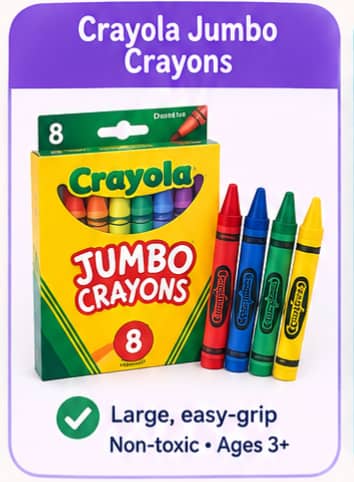
Crayola Jumbo Crayons are one of the easiest “first crayons” options to recommend because they are made for small hands and are labeled safe and non-toxic for ages 3 and up.
Crayola also says its art materials carry the ACMI AP Seal, which gives parents a stronger safety signal than a vague “non-toxic” claim alone.
These crayons work especially well if your child is still learning how to hold a coloring tool. The bigger size makes gripping simpler, and that usually means less frustration and more actual coloring.
For parents who want a dependable starter set without overthinking it, this is a strong place to begin.
BCP NOTE: This is the classic “buy once, use often” crayon choice. It is simple, recognizable, and backed by clear safety labeling on the brand page.
2) Best safe markers for kids who are ready for more color: Crayola Ultra-Clean Washable Markers
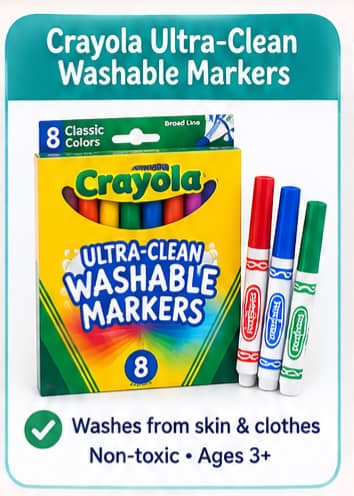
When children are old enough for markers, washable is the word parents love to see. Crayola’s Ultra-Clean Washable Markers are described as safe and non-toxic for ages 3 and up, and the official product pages say they wash easily from skin, most washable clothing, and even many painted walls.
That cleanup factor matters a lot in real life. Markers can be wonderful for creativity, but they are also the supply most likely to end up on sleeves, tables, and fingers.
A washable formula does not make a marker safer by itself, but it does make the whole experience easier for parents who want less mess.
BCP NOTE: If your child loves bold colors, this is one of the strongest safe markers for kids because it combines age guidance, easy cleanup, and a trusted brand safety reputation.
READ ALSO: 5 Best Alcohol Markers for Coloring Books Without Bleeding Through: Which Sets Actually Deliver?
3) Best for tiny hands that need control: Faber-Castell Easy Grip Crayons
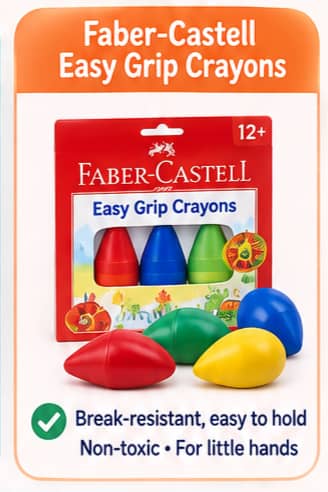
Faber-Castell’s Easy Grip crayons are a smart choice for young children who need a tool that stays steady in the hand.
The official product page describes them as non-toxic and safe for little hands, with a break-resistant shape and an erasable formula.
This kind of crayon is useful when a child is past the “just scribble” stage but not quite ready for thin pencils or markers.
The shape helps build confidence, and the safer-feeling grip can make coloring more enjoyable for kids who are still developing control.
BCP NOTE: This is the kind of product that often earns repeat purchases because the child can actually use it comfortably, which matters as much as the label.
4) Best natural-feel crayon option: Honeysticks Beeswax Crayons
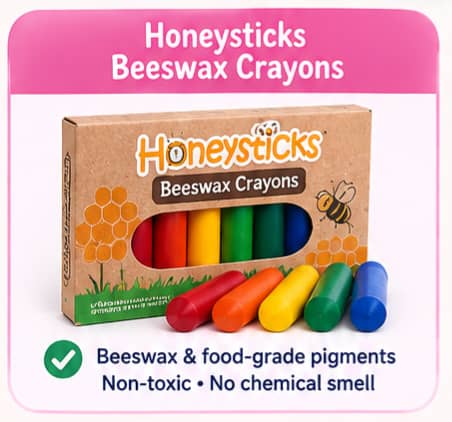
Honeysticks takes a more natural approach. The brand says its crayons are made from pure beeswax and use food and cosmetic grade pigments.
It also describes the products as non-toxic and says they have no chemical smell.
That makes Honeysticks appealing to parents who like a simpler ingredient story. These crayons are not necessarily the most “washable” option, but they are a good fit if you care more about material feel and ingredient transparency than about ultra-easy cleanup.
BCP NOTE: This is the most “natural style” pick in the roundup, and it stands out because the brand clearly explains what the crayons are made from.
5) Best washable marker with a safety-minded design: Faber-Castell Toddler Markers
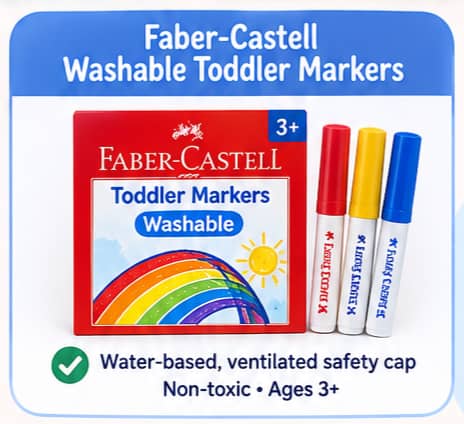
Faber-Castell’s toddler marker line is another solid marker option for young kids. The product page says the inks are water-based, made from food dyes, washable from hands and clothing, and non-toxic.
It also notes a ventilated safety cap, which is a useful safety feature for age-appropriate use.
This is the kind of detail-conscious product that appeals to parents who want markers but still want a closer eye on safety design.
The washable formula helps with cleanup, while the age 3+ guidance and cap design help narrow the risk for younger children.
BCP NOTE: If you want a marker option that feels a little more engineered for small kids, this is a strong one to consider.
DISCOVER: 4 Best Tracing Light Pads for Printable Coloring Pages: Which One Actually Makes Coloring Easier?
How to Choose the Safest Coloring Supplies
Start with the label, but do not stop there. A strong choice usually has four things at once: non-toxic certification or a clearly stated non-toxic claim, age guidance, a kid-friendly shape, and easy cleanup.
Those four things together are what make a product feel truly parent-approved.
For toddlers and very young preschoolers, chunky crayons are usually the best first pick because they are easier to hold and less likely to create big cleanup problems.
For older preschoolers, washable markers can be a fun upgrade, especially when the child has better control and understands that caps need to stay on and supplies need to be used at the table.
Also, do not ignore the packaging. If the box says ages 3+, respect that guidance. If a product has small detachable parts, treat that as a real safety issue for younger children. The safest coloring setup is usually simple, supervised, and age-matched.
BrightColoringPages Thought
For BrightColoringPages readers, the sweet spot is simple: choose coloring supplies that are easy to grip, easy to clean, and clearly labeled for your child’s age.
For younger kids, a sturdy crayon often beats a fancy marker, because confidence and control matter more than having the biggest pack on the shelf.
Final Verdict
If you want the safest starting point, begin with large crayons and a trusted non-toxic label. If your child is ready for markers, choose washable, age-appropriate options from brands that clearly explain their safety standards.
That approach keeps the fun in coloring while lowering the stress for parents. The biggest takeaway is this: the best non-toxic coloring supplies are not the ones with the loudest packaging.
They are the ones with the clearest safety signals. Once you know what to check, shopping gets a lot easier.
Conclusion
Safe coloring should feel fun, not complicated. The best non-toxic coloring supplies for young children are the ones that make sense for their age, their hands, and your cleanup routine. Start with that, and you will usually make a good choice.
READ MORE: 20 Fun Coloring Games for Classrooms That Keep Kids Calm, Creative, and Excited to Learn
Frequently Asked Questions
On art materials, non-toxic usually means the product has been evaluated for safety and meets the standards associated with labeling and toxicological review. The ACMI AP Seal is the clearest sign to look for on art supplies.
Washable markers are easier to clean off skin, clothes, and sometimes walls, but washable does not automatically mean safer. You still want a non-toxic claim, age guidance, and a trusted brand safety signal.
Chunky, age-appropriate crayons are usually the best choice for toddlers. Products like Crayola Jumbo Crayons are designed for small hands and are labeled safe and non-toxic for ages 3 and up.
Yes, especially for children under 3. CPSC warns that small parts can create choking, aspiration, or ingestion hazards for young children, so age labels and cap design matter.
Not always. Natural-feel options like beeswax crayons can be appealing, but the best choice still depends on age, grip, cleanup, and whether the product is clearly labeled and appropriate for your child.