- Coloring pages can be used for much more than keeping children occupied.
- They can help build fine motor skills, creativity, and early learning abilities.
- Parents can turn a simple coloring page into a fun educational activity.
- Coloring creates opportunities for quality family time and conversation.
- With a little creativity, one coloring page can support multiple learning goals at once.
Introduction
Coloring pages are one of the simplest tools parents can keep at home, but they are often more powerful than people realize.
Most children naturally enjoy coloring. Give them a box of crayons and an interesting picture, and they are usually happy to get started. But what many parents do not realize is that coloring pages can become learning tools, conversation starters, creativity boosters, and even stress relievers.
One thing I’ve learned from watching children engage with coloring activities is that they rarely see them as “work.” To them, coloring feels fun. That is exactly why it works so well.
The best part is that you do not need special training, expensive supplies, or complicated lesson plans. A few printable coloring pages and some simple ideas can turn everyday coloring time into a meaningful learning experience.
Let’s explore some of the best ways parents can use coloring pages at home.
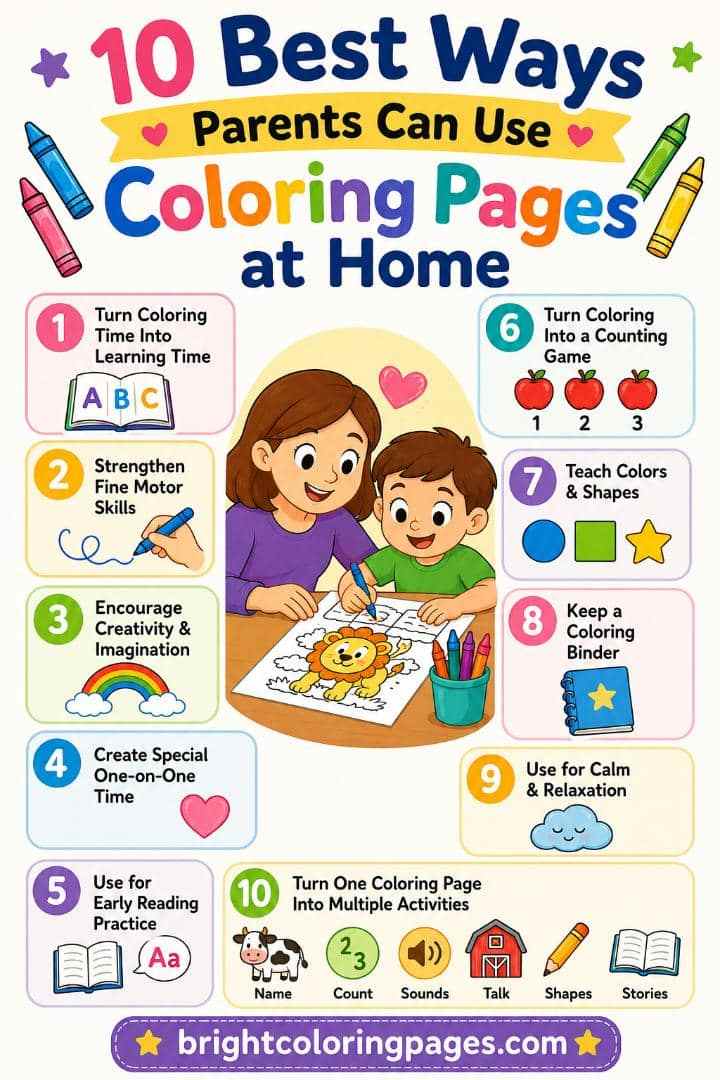
1. Turn Coloring Time Into Learning Time
A coloring page can easily become a mini lesson.
If your child is coloring animals, talk about where those animals live. If they are coloring vehicles, discuss what each vehicle does. If the page includes letters or numbers, use it as an opportunity to practice recognition and pronunciation.
For example, if your child is coloring a picture of a lion, you might ask:
- What sound does a lion make?
- Where do lions live?
- What color is a lion usually?
These simple questions help children learn without feeling like they are sitting in a classroom.
2. Use Coloring Pages to Strengthen Fine Motor Skills
One of the biggest benefits of coloring is the way it develops hand control.
When children hold crayons, stay within lines, and color different sections, they are strengthening the small muscles in their hands and fingers. These muscles are important for writing, drawing, cutting, and many everyday tasks.
Do not worry if your child colors outside the lines. That is completely normal.
The goal is progress, not perfection.
Every coloring session gives their hands a little more practice.
3. Encourage Creativity and Imagination
Coloring pages provide structure, but they also leave room for creativity.
Children do not always have to color things realistically. A purple elephant, a rainbow dinosaur, or a blue tree may not exist in real life, but they show imagination.
What actually works is this: allow children to make their own choices.
Instead of saying, “Trees should be green,” try asking:
“What color would you like your tree to be today?”
This approach encourages creative thinking and helps children feel confident in their decisions.
4. Create Special One-on-One Time
Coloring is a wonderful opportunity to slow down and connect with your child.
Sit beside them and color together. Ask questions about the picture. Talk about their day. Share stories and laugh together.
The real takeaway here is that children often remember the time spent together more than the activity itself.
Even fifteen minutes of coloring can become meaningful family time.
5. Use Coloring Pages for Early Reading Practice
Coloring pages can support literacy in simple ways.
If a page includes labels, letters, or words, point to them and read them aloud. Encourage your child to repeat them.
You can also ask questions such as:
- What letter does this word start with?
- Can you find another word that starts with the same sound?
- What do you think this picture is called?
These small interactions help children connect words with images and build early reading confidence.
6. Turn Coloring Into a Counting Game
Coloring pages are great for introducing basic math concepts.
Ask your child to count objects before coloring them.
For example:
- How many flowers do you see?
- Can you count the stars?
- Which group has more animals?
You can even create simple challenges such as:
“Color three butterflies red and two butterflies blue.”
Learning feels much more enjoyable when it happens naturally through play.
7. Use Coloring Pages to Teach Colors and Shapes
Many coloring pages naturally include shapes, patterns, and familiar objects.
Before coloring starts, ask your child to identify:
- Circles
- Squares
- Triangles
- Hearts
- Stars
You can also practice color recognition by asking questions like:
“Can you find something that should be yellow?”
These simple activities strengthen observation skills while keeping children engaged.
8. Keep a Coloring Binder
One thing I always tell parents who ask me about coloring activities is this: save the finished pages.
Create a special coloring binder or folder where your child can store their work.
Over time, you will see improvements in:
- Hand control
- Coloring accuracy
- Creativity
- Confidence
Children also love looking back at their older artwork.
It gives them a sense of accomplishment and pride.
9. Use Coloring for Calm and Relaxation
Children can have stressful days too.
They may feel frustrated, overwhelmed, tired, or simply need a quiet activity.
Coloring provides a calm space where children can slow down and focus on something enjoyable.
Many parents find that coloring works especially well:
- After school
- During quiet time
- Before bedtime
- On rainy days
It gives children a healthy way to unwind without relying on screens.
10. Turn One Coloring Page Into Multiple Activities
This is where coloring pages become truly valuable.
Imagine your child is coloring a farm scene.
You can:
- Name the animals.
- Count the animals.
- Discuss animal sounds.
- Talk about where animals live.
- Identify colors and shapes.
- Create a simple story about the farm.
Suddenly, one coloring page becomes a full learning experience.
From my experience, this is one of the smartest ways to use coloring pages at home because it combines learning, creativity, and fun all in one activity.
Simple Tips for Parents
To get the most from coloring pages:
- Let children choose pages they enjoy.
- Keep sessions relaxed and pressure free.
- Praise effort rather than perfection.
- Ask questions while they color.
- Join in whenever possible.
- Focus on fun first and learning second.
Children learn best when they feel happy, engaged, and supported.
Conclusion
Coloring pages are far more than a simple way to keep children busy. They can support creativity, fine motor development, early literacy, counting skills, emotional regulation, and family connection.
The key thing to remember is that you do not need complicated activities to help children learn. Sometimes a simple coloring page, a handful of crayons, and a little conversation are all it takes to create meaningful learning moments.
If there is one thing I’ve learned, it is that the best learning often happens when children think they are simply having fun. Coloring pages are a perfect example of that.
FAQs
What age should children start using coloring pages?
Many children can begin exploring simple coloring pages around age two or three with supervision and age appropriate supplies.
Can coloring pages help prepare children for school?
Yes. Coloring supports fine motor skills, attention, hand control, and other abilities that contribute to school readiness.
How long should coloring sessions last?
Most young children benefit from sessions lasting about 10 to 20 minutes, depending on their age and interest level.
Are coloring pages educational?
Absolutely. They can help teach letters, numbers, colors, shapes, vocabulary, and many other early learning concepts.
Should parents color with their children?
Yes. Coloring together can strengthen relationships, encourage conversation, and make the activity even more enjoyable. :::