
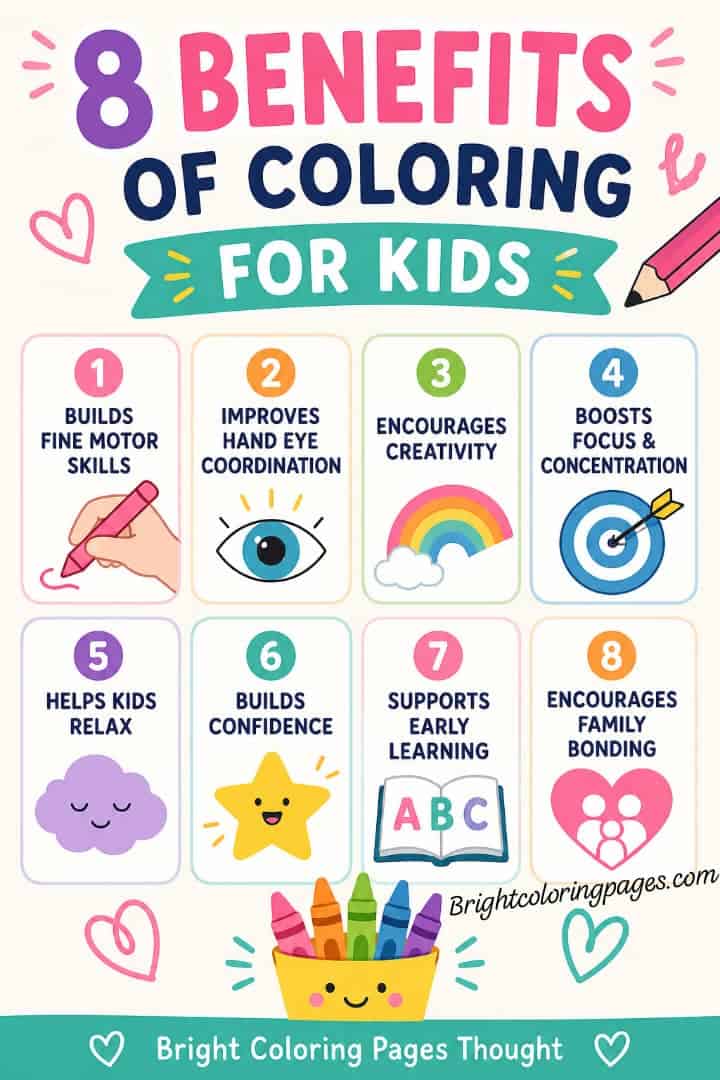
Coloring may look like a simple activity, but for kids, it can do a whole lot more than fill a page with color. It is fun, relaxing, and easy to set up, which is exactly why so many parents, teachers, and caregivers keep coming back to it.
In my view, the best activities for children are often the ones that feel like play while quietly supporting growth. Coloring is one of those activities. It can help kids build fine motor skills, improve focus, express creativity, and even learn how to relax.
So whether you are looking for a quiet indoor activity, a screen free break, or a way to support early learning, coloring is worth a closer look. Let us explore the many benefits of coloring for kids and why this old favorite still matters so much today.
1. Coloring Helps Build Fine Motor Skills
One of the biggest benefits of coloring for kids is the way it helps develop fine motor skills. When children hold crayons, colored pencils, or markers, they are strengthening the small muscles in their hands and fingers.
That might not sound exciting at first, but it matters a lot. These muscles are important for writing, drawing, cutting with scissors, tying shoelaces, and many other everyday tasks. The more kids practice controlling their hand movements, the more coordinated and confident they become.
Coloring also helps children learn how to apply just the right amount of pressure. Press too hard and the crayon may break. Press too softly and the color may not show clearly. That kind of practice helps build control in a natural, low pressure way.
2. It Improves Hand Eye Coordination
Coloring is also great for hand eye coordination. Kids need to look at the page, decide where they want to color, and guide their hands to match what their eyes see.
That may seem simple, but it is actually an important skill. Staying inside the lines, or even just trying to, teaches children how to control their movements more carefully. Over time, this can support better coordination in schoolwork and everyday life.
Think of it like practice for the brain and hands working together. The more a child colors, the more they learn how to move with purpose.
3. Coloring Encourages Creativity and Self Expression
Not every child is ready to paint a masterpiece, but almost every child can pick up a crayon and make a page their own. That is part of what makes coloring so powerful.
Children get to choose their own colors, patterns, and ideas. A tree can be green, purple, or rainbow. A cat can wear a blue collar, pink ears, or both. There is no single right answer, and that freedom encourages self expression.
This is one thing I always appreciate about coloring. It gives kids a safe and simple way to explore creativity without pressure. They do not have to worry about being perfect. They just get to create.
4. It Helps Kids Focus and Concentrate
In a world full of distractions, activities that help children slow down and focus are especially valuable. Coloring is one of those activities.
When a child sits down to color, they are practicing attention and concentration. They are learning how to stay with one task for a few minutes at a time, which can be helpful for school and other learning activities.
It also teaches patience. A child may want to rush through a page, but coloring encourages them to take their time and finish what they started. That kind of steady attention is a skill that grows over time.
5. Coloring Can Be Calming and Stress Reducing

Coloring is not only educational, it can also be soothing. Many children find it comforting to sit quietly and fill in shapes with color. The repeated motion of coloring can create a peaceful rhythm that helps them relax.
This can be especially helpful after a busy school day, during quiet time, or before bed. It gives kids a break from screens, noise, and constant stimulation.
According to what many parents and educators observe, children often settle more easily when they have a calm, hands on activity to focus on. Coloring fits that need beautifully.
6. It Builds Confidence and a Sense of Achievement
Children love finishing something they can point to and say, “I did that.” Coloring gives them that feeling.
When a child completes a page, they get a little boost of confidence. They can see the result of their effort right away, which helps them feel capable and proud. That sense of achievement can be especially meaningful for younger children who are still learning new skills.
Even small wins matter. A finished coloring page can motivate a child to keep trying, keep learning, and keep exploring new activities.
7. Coloring Supports Early Learning

Coloring can also be turned into a learning tool. You can use coloring pages to introduce or reinforce colors, shapes, numbers, letters, animals, vehicles, seasons, holidays, and more.
For example, a child coloring a butterfly can learn about nature. A page with numbers can support counting. A holiday themed page can help build excitement around celebrations while also teaching vocabulary.
This is where printable coloring pages become especially useful. They can match a child’s age, interests, or learning level, which makes coloring feel both fun and purposeful.
8. It Creates Quality Time Between Kids and Adults

Coloring is also a great way to connect. Parents, siblings, teachers, and caregivers can sit with a child and color together. That shared time often opens the door to conversation, laughter, and bonding.
You do not need anything fancy. Just a few crayons, some paper, and a little time can turn into a lovely memory. Sometimes the simplest activities create the warmest moments.
And honestly, that is one of the reasons coloring has stayed so popular. It is easy to do, but it still brings people together.
Conclusion
The benefits of coloring for kids go far beyond keeping them busy. It helps build fine motor skills, strengthens hand eye coordination, encourages creativity, supports focus, and gives children a calming, confidence boosting activity they can enjoy anywhere.
Best of all, coloring is simple, affordable, and flexible. It can be used at home, in the classroom, on the go, or during quiet time. If you are looking for an activity that is both fun and meaningful, coloring is a wonderful choice.
So the next time your child reaches for crayons, know that they are doing more than making a pretty picture. They are learning, growing, and expressing themselves one color at a time.
FAQs
Kids can start coloring as soon as they are able to hold a crayon or marker. Younger children may scribble at first, while older kids can work on staying inside the lines and adding more detail.
There is no strict rule. Coloring can be a daily activity, a quiet time option, or something children do whenever they feel like it. Even short coloring sessions can be helpful.
Yes, it can. Coloring helps strengthen hand muscles, improve grip, and build control, all of which support early writing development.
Crayons are usually a great choice for younger children because they are easy to hold and control. Colored pencils and washable markers can be useful for older kids, depending on their age and skill level.
Yes. Coloring often has a calming effect because it gives children a quiet, focused activity that helps them slow down and unwind.