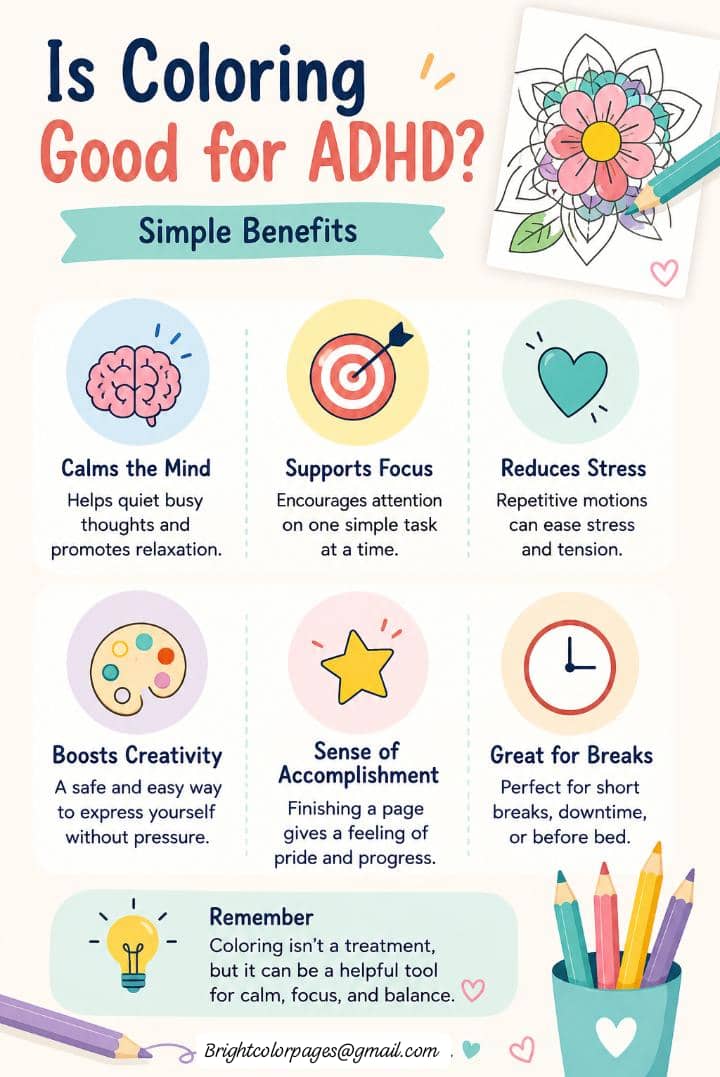
- Coloring can be a calming activity for some people with ADHD.
- It provides a simple task that may help reduce feelings of overwhelm.
- The repetitive motions involved in coloring can feel soothing and relaxing.
- Coloring is not a treatment for ADHD, but it may support focus and emotional regulation.
- Kids, teens, and adults can all enjoy the benefits of coloring in different ways.
Introduction
If you have ADHD, you probably know what it feels like when your mind seems to be moving in a dozen different directions at once. Staying focused can be challenging. Sitting still can feel uncomfortable. Even relaxing sometimes feels harder than it sounds.
That is why many parents, teachers, and adults with ADHD are always looking for simple activities that can help create moments of calm.
One activity that often comes up is coloring.
At first glance, coloring might seem like something meant only for young children. But over the years, people of all ages have discovered that coloring can be surprisingly enjoyable and relaxing.
So, is coloring good for ADHD?
The short answer is yes, it can be. While coloring is not a cure or treatment for ADHD, it may offer several benefits that support focus, calmness, and emotional well being.
Let’s look at why.
Is Coloring Good for ADHD?
For many people with ADHD, coloring can be a helpful and enjoyable activity.
It combines creativity with structure, which is something many ADHD minds respond well to. There is a clear task to complete, but there is also enough freedom to make personal choices about colors and designs.
Because coloring is simple and low pressure, it can provide a break from the constant demands of daily life.
That does not mean everyone with ADHD will love coloring. People experience ADHD differently, and what works for one person may not work for another.
Still, many individuals find that coloring gives them a chance to slow down, focus on one thing, and enjoy a moment of calm.
Why Coloring Can Feel Helpful for ADHD
One reason coloring can be appealing is that it gives the brain something specific to focus on.
Many everyday activities require constant decision making, planning, or multitasking. That can sometimes feel exhausting for people with ADHD.
Coloring is different.
The page is already there. The shapes are already drawn. The goal is simple.
All you have to do is choose a color and begin.
This balance between structure and creativity can make coloring feel approachable. There is enough guidance to keep the activity from becoming overwhelming, but there is still room for personal expression.
In my view, this simplicity is one of coloring’s biggest strengths. It asks very little from you while still giving your mind something engaging to do.
Benefits of Coloring for ADHD Explained Simply
It Can Help the Mind Slow Down
People with ADHD often describe having a busy mind.
Coloring encourages attention on a single task. Instead of jumping between thoughts, notifications, or responsibilities, your focus shifts to filling shapes, choosing colors, and staying within the lines if you choose to.
This can create a feeling of mental quietness for some people.
It May Support Focus for Short Periods
Coloring is not a cure for attention difficulties.
However, it can provide practice in staying engaged with one activity.
Because coloring is enjoyable and visually rewarding, some people find it easier to maintain attention compared to tasks that feel boring or stressful.
Even a few minutes of focused coloring can feel like a small win.
It Can Feel Calming
The repeated movements involved in coloring often feel soothing.
Moving a pencil, crayon, or marker across a page creates a predictable rhythm that many people find relaxing.
This calming effect is one reason coloring books have become popular among both children and adults.
It Provides a Creative Outlet
ADHD is often associated with creativity and imagination.
Coloring offers a simple way to express that creativity without the pressure of starting a project from scratch.
You do not need artistic skills or special training.
You simply choose colors and enjoy the process.
It May Help Reduce Stress
Life can feel overwhelming at times, especially when you are dealing with school, work, responsibilities, or emotional challenges.
Coloring creates an opportunity to step away from those pressures for a little while.
The activity itself is simple, enjoyable, and often comforting.
For many people, that alone can help lower stress levels.
Why Some People with ADHD Prefer Coloring Over Other Hobbies
One thing I have noticed is that coloring feels less intimidating than many creative hobbies.
Painting, drawing, crafting, and other artistic activities often require planning and decision making.
Coloring removes much of that pressure.
The design is already prepared. The task is clear. Progress is easy to see.
That makes coloring feel manageable, even on days when energy or focus is limited.
Many people also enjoy the sense of accomplishment that comes from finishing a page. It provides a clear beginning, middle, and end, which can be satisfying for ADHD brains that sometimes struggle with long term projects.
When Coloring May Not Help as Much
Coloring is not the perfect solution for everyone.
Some people with ADHD may find it too repetitive or not stimulating enough to hold their attention.
Others may prefer activities that involve movement, problem solving, or social interaction.
And that is completely normal.
ADHD affects people in different ways. What feels calming and enjoyable to one person may feel boring to another.
The goal is not to force yourself to enjoy coloring. It is simply to explore whether it might be a useful tool for you.
Simple Ways to Make Coloring More Helpful
If you want to try coloring, here are a few easy ideas:
- Start with short sessions of 10 to 15 minutes.
- Choose simple coloring pages rather than highly detailed designs.
- Keep coloring supplies in an easy to reach place.
- Focus on having fun instead of making the page perfect.
- Listen to calm music if it helps you relax.
- Use coloring as part of a quiet break during the day.
- Experiment with crayons, colored pencils, or markers to find what you enjoy most.
The best approach is the one that feels enjoyable and sustainable.
Who Coloring May Be Best For
Coloring can be a good option for kids, teens, and adults with ADHD who enjoy creative activities.
It may be especially useful during:
- Quiet time after school
- Study breaks
- Stressful moments
- Waiting periods
- Wind down routines before bedtime
- Relaxing weekends at home
Because coloring is flexible and accessible, it can fit into many different lifestyles.
Conclusion
So, is coloring good for ADHD?
For many people, yes.
Coloring offers a simple, low pressure activity that may support focus, encourage relaxation, and provide a creative outlet. While it is not a treatment for ADHD, it can be a useful tool for creating moments of calm in a busy day.
The best part is that coloring is easy to try. All you need is a coloring page and a few colors.
If it helps you feel more focused, more relaxed, or simply gives you a break from the noise of the day, that is already a valuable benefit.
FAQs
It may help some people practice focusing on a single activity for short periods of time. While results vary, many individuals find coloring easier to stick with than more demanding tasks.
Yes. Coloring can provide a structured, creative activity that many children enjoy. It may also offer opportunities to practice patience and attention.
No. Coloring is not a replacement for professional support, therapy, or medical treatment. It is simply an activity that may help some people feel calmer and more focused.
That depends on the person. Some prefer simple designs with large spaces, while others enjoy more detailed pages. The best choice is the one that feels engaging and enjoyable.