
- Coloring is a great activity for kids because it supports creativity, focus, and fine motor skills.
- There is no strict rule for how often children should color, because it depends on their age, mood, and interest.
- Younger kids may enjoy short coloring sessions, while older kids can often stay engaged for longer periods.
- Coloring works best when it feels fun, relaxed, and pressure free, not like a chore.
- A little coloring every day can be helpful, but even a few times a week can still offer great benefits.
Introduction
If you have ever watched a child sit down with crayons and quietly color for a while, you already know how special that moment can be.
Coloring is simple, calming, and fun, but it is also a meaningful activity that can support a child’s growth in many ways.
So how often should kids do coloring activities?
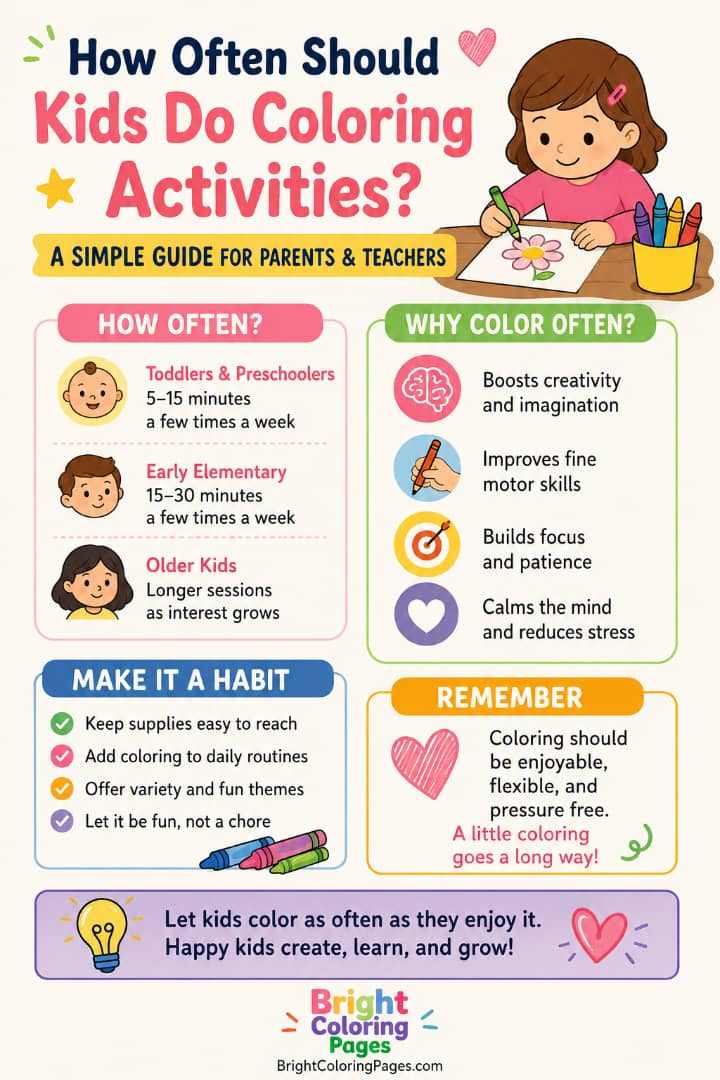
The short answer is that there is no one perfect schedule. Some children enjoy coloring every day, while others may only want to do it a few times a week.
What matters most is giving children regular chances to color in a way that feels enjoyable and age appropriate.
In this guide, we will talk about how often kids can color, what factors to consider, and how to make coloring a healthy and enjoyable part of everyday life.
Why Coloring Is Worth Doing Often
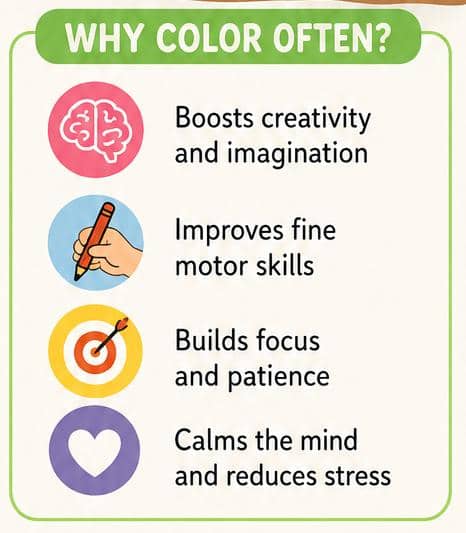
Coloring may look like a small activity, but it can support several important skills. It gives children a chance to practice holding crayons or pencils, staying within lines, choosing colors, and finishing a project.
It also encourages creativity and self expression. For younger children, coloring helps build hand strength and coordination.
For older children, it can improve focus, patience, and attention to detail. Coloring can also be a quiet break from busy play, screens, and schoolwork.
That is one reason regular coloring can be a good idea. The more children practice, the more familiar and comfortable they become with the activity.
Still, it should stay fun. When coloring feels forced, kids may lose interest.
How Often Should Kids Color?
A good general answer is this: children can color as often as they enjoy it.
For many kids, a few times a week is already helpful. Others may naturally want to color every day for short periods.
Some children may go through phases where they color a lot, then take a break, then come back to it later. That is completely normal.
Here is a simple way to think about it:
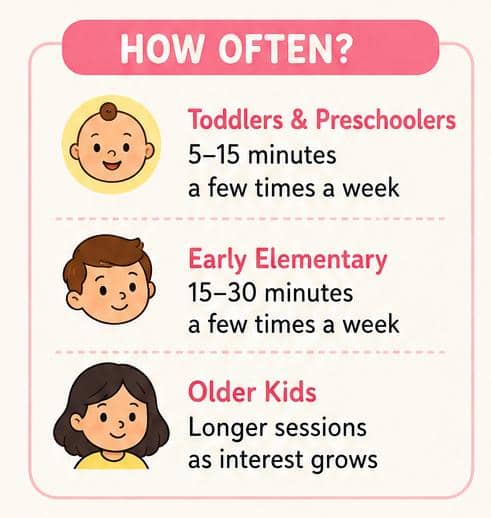
- Toddlers and preschoolers may enjoy coloring for 5 to 15 minutes at a time.
- Early elementary kids may color for 15 to 30 minutes, depending on interest.
- Older kids may stay engaged for longer if they are using coloring as a creative hobby or a calming activity.
At Bright Coloring Pages, we believe the best schedule is the one that fits the child, not the one that looks good on paper.
A child who colors happily twice a week is doing just fine. A child who wants to color every afternoon is also doing just fine.
What Affects How Often Kids Should Color?
Several things can help you decide how often coloring makes sense.
1. Age
Younger children usually have shorter attention spans, so short sessions work best. Older children may be able to sit longer and focus more deeply.
2. Interest
Some kids naturally love coloring. Others prefer building, reading, running, or pretend play. A child does not need to color every day to benefit from it.
3. Mood and energy
Coloring can be calming, but some children may only want it when they are relaxed. If a child is tired, upset, or restless, a different activity may be a better fit first.
4. Purpose
Are they coloring for fun, for learning, for fine motor practice, or as a quiet time activity? The answer can change how often it is helpful.
5. Screen time balance
Coloring can be a nice low screen alternative. If you are trying to create a more balanced routine, regular coloring can be one of the easiest habits to include.
Want to start coloring right away? Here are 30 Beginners coloring pages for kids.
A Helpful Routine by Age Group
You do not need a strict schedule, but a simple routine can make coloring easy to include.
For toddlers, coloring can happen during playtime, after snacks, or when they need a calm activity. Even very short sessions matter.
For preschoolers, coloring a few times a week is often enough, though many will happily do it more often. Keep the pages simple and the expectations low.
For school age children, coloring can be part of homework breaks, quiet time, weekend fun, or after school wind down time. These children may enjoy more detailed pages and longer sessions.
For older kids, coloring may become a hobby, stress relief activity, or creative outlet. At this age, they may not color every day, but they can still enjoy it when they need a break or want to relax.
Read Also: 5 Mental Health Benefits of Coloring for Adults
Signs Your Child May Need More or Less Coloring
Sometimes the child will show you what works best.
You may want to offer more coloring if your child:
- enjoys sitting with art supplies
- needs quiet activities
- is practicing pencil control
- likes creative tasks
- seems calm and focused while coloring
You may want to keep it shorter if your child:
- loses interest quickly
- gets frustrated easily
- wants movement more than sitting
- prefers other creative activities
- seems tired or distracted
There is no prize for the longest coloring session. The goal is not to make children sit still for a long time. The goal is to help them enjoy the process.
How to Make Coloring a Healthy Habit
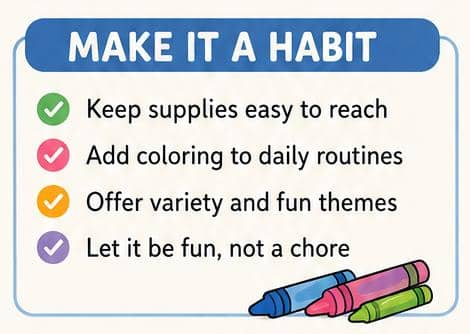
If you would like coloring to become a regular part of your child’s routine, keep it simple.
Try placing coloring pages, crayons, and pencils in an easy to reach spot. Children are more likely to color when the materials are already ready.
You can also make coloring part of a familiar routine, such as after school, before dinner, or during quiet time.
It also helps to offer variety. Some days a child may want animals, other days shapes, cartoons, letters, or holiday pages. Different themes keep the activity fresh and exciting.
Most importantly, avoid making coloring feel like a test. Children do not need to stay inside the lines perfectly or use the “right” colors. Let them experiment. A purple tree or a blue cat can be part of the fun.
Simple Coloring Time Ideas
Here are a few easy ways to include coloring more often without overthinking it:
You can set aside a 10 minute coloring break after school. You can keep coloring pages in a travel bag for appointments or car rides.
You can use coloring as part of quiet time (see some cute 25 quiet time coloring pages for kids free Printable) before bedtime. You can even turn it into a shared family activity once in a while.
Another nice idea is to rotate coloring pages every week. That gives children something new to look forward to without needing a big setup.
The Bottom Line
Kids do not need a perfect coloring schedule. Some will color daily, some will color weekly, and some will color only when the mood strikes. All of those can be perfectly healthy choices.
A good rule of thumb is to offer coloring regularly, but keep it flexible. Let the child decide how long to stay engaged, and let the activity stay playful.
When coloring is enjoyable, it naturally becomes a useful part of a child’s routine.
So, how often should kids do coloring activities? Often enough to enjoy it, practice it, and benefit from it, but never so much that it stops being fun.
Frequently Asked Questions
Yes. Many kids enjoy coloring every day, especially if the sessions are short and pressure free. Daily coloring can be a nice habit as long as the child still has time for movement, play, and other activities.
It depends on the child’s age and attention span. Younger children may only stay interested for a few minutes, while older children may color for 20 to 30 minutes or more.
Yes, for many children it can. Coloring is a quiet, steady activity that may help children settle down after busy or exciting moments.
That is okay. Not every child enjoys the same activities. You can offer coloring sometimes, but there is no need to force it. The goal is to support creativity, not create stress.
Simple pages work well for younger children, while older kids may enjoy more detailed designs. The best pages are the ones that match the child’s age, interest, and mood.