5 Quick Reasons Coloring Helps Reduce Anxiety
- Coloring gives the brain something simple and calming to focus on.
- It encourages mindfulness and helps bring attention to the present moment.
- Coloring provides a healthy outlet for emotions and stress.
- It can improve focus while reducing mental overload.
- Both children and adults can use coloring as an easy self care activity.
Introduction
Anxiety is something many people deal with, whether they are five years old or fifty.
Children may feel anxious about school, new situations, or changes in their routine. Adults often face stress from work, family responsibilities, finances, and the endless demands of daily life.
The good news is that managing anxiety does not always require complicated solutions.
Sometimes the simplest activities can make a meaningful difference.
One thing I’ve come to realize after years of observing creative activities is that coloring has a unique ability to slow people down. It gives the mind a break from constant thinking and allows attention to settle on something pleasant and manageable.
That may sound surprisingly simple, but there is real value in it.
Coloring combines focus, creativity, and relaxation in a way that feels natural rather than forced. Whether you are helping a child unwind after a busy day or looking for your own stress relief, coloring can be a surprisingly powerful tool.
Let’s explore exactly why it works so well.
What Happens in the Brain When We Color?
When anxiety takes over, the mind often jumps from one worry to another.
Coloring interrupts that cycle.
As you choose colors, stay within shapes, and focus on the page, your attention shifts away from stressful thoughts. Instead of worrying about what might happen tomorrow, you become focused on what is happening right now.
This is one reason coloring is often compared to mindfulness practices.
Think of it like this: your brain gets a chance to take a short vacation from worry.
The repetitive movements, visual focus, and creative choices all work together to create a calming experience.
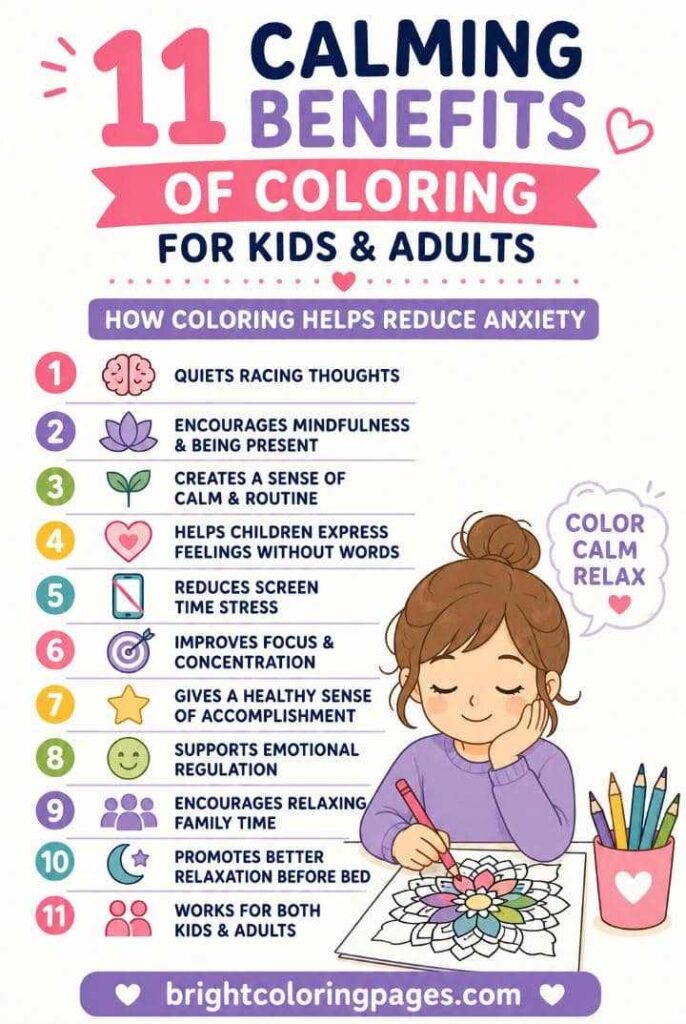
1. Coloring Helps Quiet Racing Thoughts
Have you ever noticed how difficult it can be to relax when your mind is running in ten different directions at once?
Anxiety often creates that feeling.
Coloring gives your brain a single task to focus on. Instead of replaying worries or stressful situations, your attention moves toward colors, patterns, and creative decisions.
For many people, this mental shift feels like turning down the volume on anxious thoughts.
2. Encourages Mindfulness and Being Present
Mindfulness simply means paying attention to the present moment.
Coloring naturally encourages this.
As you focus on filling a shape, blending colors, or finishing a section, your attention stays on the activity rather than on future worries.
Just so you know, this is one reason many therapists and wellness experts recommend creative activities for stress management.
You do not have to meditate perfectly. Sometimes sitting down with a coloring page is enough to help you slow down.
3. Creates a Sense of Calm and Routine
Anxiety often grows when life feels unpredictable.
A simple coloring routine can create a small pocket of stability each day.
Maybe it is ten minutes after school. Maybe it is twenty minutes before bedtime.
The routine itself becomes comforting because it gives the brain something familiar to expect.
Children especially benefit from predictable activities that help them feel safe and secure.
4. Helps Children Express Feelings Without Words
Young children do not always have the vocabulary to explain what they are feeling.
Sometimes they are frustrated, worried, excited, or overwhelmed but cannot fully describe those emotions.
Coloring gives them another way to express themselves.
Ask questions like:
- What color matches your mood today?
- Which part of this picture is your favorite?
- How does this character feel?
These simple conversations can reveal a lot about what a child is experiencing.
5. Reduces Screen Time Stress
Screens are a major part of modern life.
While technology offers many benefits, constant notifications, videos, and digital stimulation can leave both children and adults feeling mentally exhausted.
Coloring provides a welcome break.
Unlike screens, coloring encourages slower thinking. There are no alerts, no pop ups, and no pressure to keep scrolling.
It is simply you, your colors, and the page in front of you.
6. Improves Focus and Concentration
Anxiety can make concentration difficult.
Many people find it hard to stay focused when their thoughts keep drifting toward worries.
Coloring requires gentle attention. It encourages the brain to stay engaged with a single task.
Over time, this practice can help strengthen attention and concentration skills.
For children, this can support classroom readiness. For adults, it can provide a valuable mental reset.
7. Gives a Healthy Sense of Accomplishment
There is something satisfying about completing a coloring page.
Even a small accomplishment can create positive feelings.
What nobody tells you is that these little wins matter more than most people realize.
When anxiety makes life feel overwhelming, finishing a creative activity provides evidence that progress is possible.
You started something and completed it.
That feeling can be surprisingly powerful.
8. Supports Emotional Regulation
Emotional regulation is the ability to manage feelings in a healthy way.
For children, this skill is still developing. For adults, stressful situations can sometimes make it difficult too.
Coloring creates a pause between feeling and reacting.
It gives the mind a chance to slow down and process emotions more calmly.
That is one reason coloring is often used during quiet time, relaxation periods, or calming routines.
9. Encourages Relaxing Family Time
One of the best things about coloring is that it works for all ages.
Parents, children, grandparents, and caregivers can all participate together.
A family coloring session creates opportunities for conversation, laughter, and connection without the pressure of competition.
Quick challenge:
Why not choose a coloring page tonight and see who comes up with the most creative color combination?
The goal is not perfection.
The goal is simply spending time together.
10. Promotes Better Relaxation Before Bed
Many people reach for phones, tablets, or televisions before bed.
Unfortunately, those activities can sometimes make it harder to unwind.
Coloring offers a calmer alternative.
A short coloring session before bedtime can help signal to the brain that it is time to slow down.
Children often benefit from this routine, and many adults find it relaxing as well.
11. Works for Both Kids and Adults
Perhaps the best thing about coloring is its simplicity.
You do not need expensive equipment.
You do not need special skills.
You do not need hours of free time.
All you need is a coloring page and a few coloring supplies.
From my experience, activities that are easy to start are often the ones people stick with the longest.
That makes coloring one of the most accessible anxiety relief tools available.
Simple Ways to Use Coloring for Anxiety Relief
Here are a few easy ideas:
Create a Calm Coloring Space
Find a quiet corner with comfortable seating and good lighting.
Choose Relaxing Themes
Nature scenes, flowers, animals, and simple patterns are often especially calming.
Keep Sessions Short
Even ten to fifteen minutes can make a difference.
Focus on Enjoyment
Remember, there is no right or wrong way to color.
The process matters far more than the final result.
Conclusion
Coloring may seem like a simple activity, but its impact can be surprisingly powerful.
It helps quiet racing thoughts, encourages mindfulness, improves focus, and provides a healthy outlet for emotions. It can also create meaningful moments of connection between children and adults.
The real takeaway here is that anxiety relief does not always have to be complicated. Sometimes a box of crayons, a coloring page, and a few quiet minutes are enough to help the mind slow down and breathe a little easier.
If there is one thing I’ve learned, it is that simple activities often deliver the biggest benefits. Coloring is a perfect example.
FAQs
Can coloring really help reduce anxiety?
Yes. Coloring encourages focus, mindfulness, and relaxation, which can help reduce anxious thoughts and feelings.
Is coloring beneficial for adults too?
Absolutely. Many adults use coloring as a stress relief activity because it provides a calming break from daily pressures.
What types of coloring pages are best for relaxation?
Nature scenes, flowers, animals, mandalas, and simple patterns are popular choices for stress relief.
How long should a coloring session last?
Many people benefit from sessions lasting 10 to 20 minutes, although you can color for longer if you enjoy it.
Can coloring replace professional anxiety treatment?
Coloring can be a helpful coping tool, but it is not a replacement for professional support when anxiety is severe or persistent. :::