
- Coloring becomes more exciting when every picture has a story behind it.
- Storytelling helps kids and adults think more creatively while they color.
- You can use prompts, characters, and scenes to turn a coloring page into a mini adventure.
- This activity is great for home, classrooms, quiet time, and family bonding.
- The best part is that there is no single right answer, only imagination, color, and fun.
Coloring is already a lovely activity on its own. It is relaxing, simple, and fun. But when you combine coloring with storytelling, something magical happens.
The page is no longer just a picture. It becomes a scene. A character. A moment. A little world waiting to be discovered.
That is what makes this combo so special. Coloring gives the visual part, while storytelling gives the heart of the experience.
Together, they help children and adults slow down, think creatively, and build something more personal than a finished page.
Have you ever looked at a coloring page and wondered, “Who is this character?” or “What just happened before this moment?” That is storytelling waiting to happen.
In this post, we will explore easy and fun ways to combine coloring with storytelling at home, in class, or during creative time with kids.
Why Coloring and Storytelling Work So Well Together
Coloring and storytelling naturally support each other. Coloring helps a person focus on shapes, patterns, and colors.
Storytelling helps them think about characters, emotions, actions, and events. When you put them together, you get a richer creative experience.
A child coloring a rabbit in a garden might simply enjoy choosing pink ears or a yellow flower. But if you ask, “What is the rabbit looking for?” or “Where is the rabbit going?” the activity becomes more meaningful. Suddenly, the page has purpose.
Storytelling also makes coloring feel less like a task and more like play. That is important, especially for children who love imagination but may not always know how to start telling a story on their own.
A picture gives them a starting point. Their imagination does the rest.
Start with a Picture That Suggests a Story
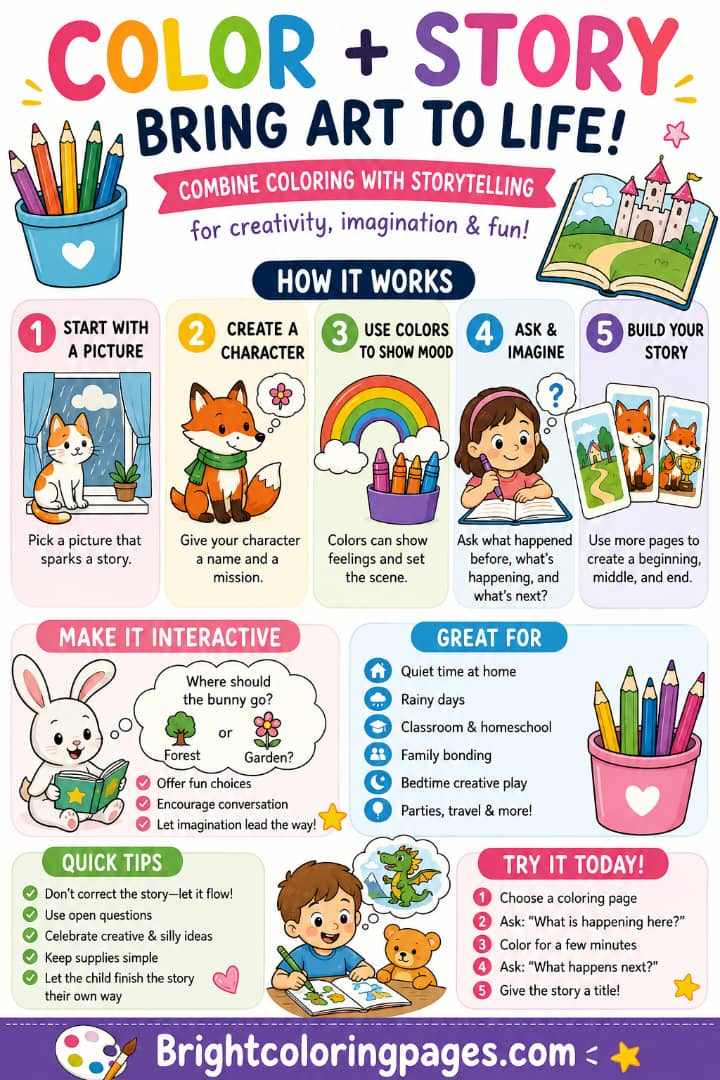
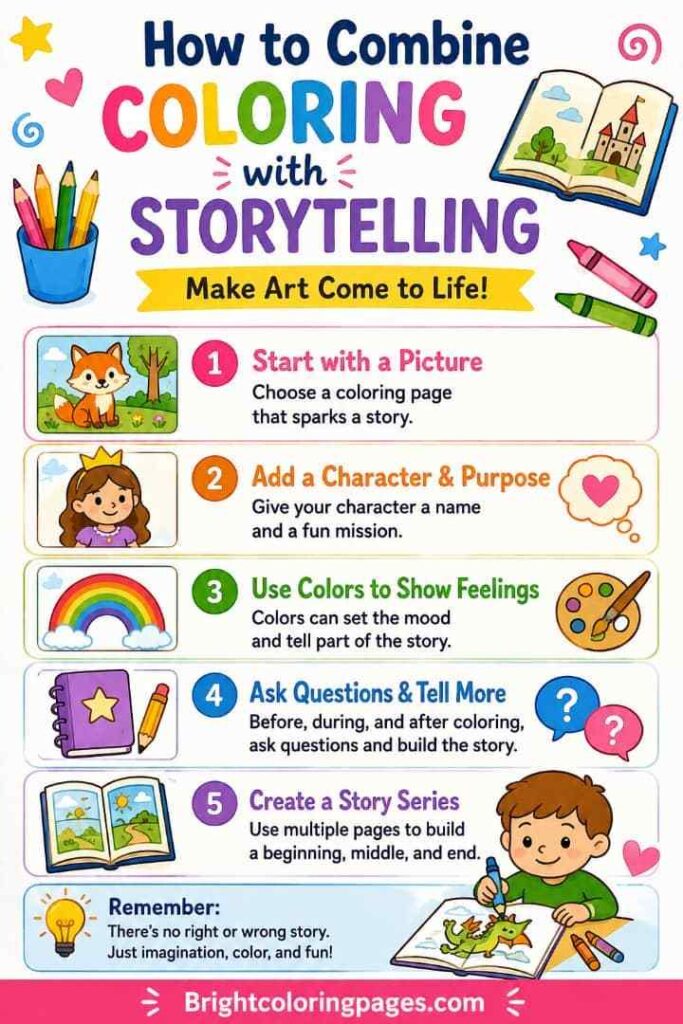
The easiest way to combine coloring with storytelling is to choose a page that already looks like part of a story. It does not need to be complicated. In fact, simple pages often work best.
A cat sitting near a window can become a curious cat watching the rain.
A dinosaur in a field can become a brave dinosaur exploring a new land.
A princess holding a lantern can become a character searching for a hidden treasure.
The key is to look at the image and ask a few gentle questions:
Who is this?
Where are they?
What are they doing?
What happened before this moment?
What might happen next?
These questions open the door to imagination without pressure.
Add a Character Before the Coloring Begins
One fun way to build storytelling into coloring is to introduce a character before the crayons come out. You can do this in a simple, playful way.
For example, you might say, “This is Milo the fox. He is on a mission to find the brightest flower in the forest.” Now the child is not just coloring a fox. They are helping Milo on an adventure.
You can do the same for any coloring page. A butterfly might be on her first flight. A robot might be delivering a secret message. A puppy might be searching for his favorite ball.
Once a character has a purpose, the coloring page becomes part of a story world.
This approach works beautifully with kids because it gives direction while still leaving room for creativity.
Use Colors to Show Feelings and Mood
Coloring is not only about making things look pretty. It can also help tell the emotional side of a story.
Bright colors can show happiness, excitement, or energy.
Cool colors can suggest calm, evening time, or mystery.
Dark colors can create suspense, stormy weather, or a nighttime scene.
Soft colors can make a story feel gentle, peaceful, or dreamy.
Ask simple questions like:
Is this a happy day or an adventure day?
Is the character calm or nervous?
Is the sky sunny, cloudy, or magical?
When children choose colors based on the mood of the story, they begin to connect emotion with visual expression. That is a powerful creative skill.
Turn the Coloring Page into a Story Prompt
If you want to make the activity more interactive, treat the coloring page like a writing or speaking prompt.
Here are a few easy ways to do that:
Before coloring: “Tell me what is happening in this picture.”
During coloring: “What do you think this character is saying?”
After coloring: “What happens next in the story?”
You can also let kids dictate a short story while they color. This works well for younger children who may not be ready to write a full paragraph yet. You write down their words, and they get to see their ideas become real.
For older kids, you can ask them to write a title for the picture or a few sentences about the scene. That small step turns a coloring page into a creative project.
Build a Story Around Each Part of the Page
Another fun method is to assign a story element to different parts of the image.
For example, in a coloring page with a girl, a tree, and a river:
- the girl could be the main character,
- the tree could be a place she visits,
- the river could be the obstacle she must cross.
This is a great way to help children think about story structure without using complicated lessons. They are simply learning that stories have characters, settings, and events.
You can even ask them to color each part based on what role it plays in the story. Maybe the character’s clothes show bravery. Maybe the tree is magical. Maybe the river is full of surprises. The page becomes both an art activity and a storytelling map.
Try Coloring Series Instead of One Single Page
One page is fun, but a series of related coloring pages can make storytelling even better.
For example, you could use:
- a page showing a character leaving home,
- another page showing the character exploring,
- and a final page showing the character returning with a prize or lesson.
Now you have a beginning, middle, and end.
This method is especially useful for classrooms, homeschool activities, and creative weekends. Children love seeing how one picture leads to the next. It gives them a sense of progress and makes the story feel complete.
If you are a parent or teacher, this is also a wonderful way to encourage sequencing, memory, and narrative thinking.
Make It Interactive with Questions and Choices
One of the best things about combining coloring with storytelling is that it invites conversation. It is not a silent activity unless you want it to be. You can make it playful and interactive with choices.
For example:
- Should the bunny go to the garden or the forest?
- Should the castle be sunny or mysterious?
- Should the dragon be friendly or shy?
- Should the day end in a celebration or a surprise?
Choices like these make children feel involved. They are not just following instructions. They are helping create the story.
And honestly, that is where the fun really begins.
Great Occasions for Coloring with Storytelling
This activity fits into many moments of the day. You do not need a special occasion.
It works well for:
- quiet time at home
- rainy days
- classroom art time
- family bonding
- bedtime creative play
- birthday party activities
- travel or waiting time
Because it is flexible, it can be used in small doses or as a longer creative session. You can spend ten minutes on a simple story or stretch it into a full afternoon of art and imagination.
Tips to Make It Even More Fun
To get the most from coloring with storytelling, keep the mood light and playful.
Here are a few easy tips:
- Do not correct the story too much. Let imagination lead.
- Use open questions instead of yes or no questions.
- Celebrate unusual ideas. A rainbow monster or a flying turtle is part of the fun.
- Keep supplies simple. Crayons, pencils, markers, or colored pencils are enough.
- Let the child finish the story in their own way.
Remember, this is not about perfect art or perfect writing. It is about creative expression.
A Simple Activity to Try Today
Here is a very easy activity you can do right away.
Step 1: Choose a coloring page with a clear character or scene.
Step 2: Ask one question: “What is happening here?”
Step 3: Let the child color for a few minutes.
Step 4: Ask another question: “What happens next?”
Step 5: Give the story a title together.
That is it. Simple, fun, and surprisingly powerful.
You may be amazed at how quickly a child opens up when a coloring page gives them something to talk about.
Conclusion
Coloring and storytelling make a beautiful pair. One gives the picture, the other gives the meaning. One fills the page with color, the other fills it with imagination.
When you combine them, you do more than keep someone busy. You help build creativity, confidence, language skills, and emotional expression in a way that feels natural and enjoyable.
So the next time you pick up a coloring page, do not just ask, “What color should this be?” Try asking, “What story does this picture want to tell?”
That one question can turn a simple activity into a little creative adventure.
FAQs
Any age can enjoy it. Younger children can tell simple oral stories, while older kids can write longer ones. Adults can enjoy it too as a relaxing creative exercise.
No. Any page can work. Pages with characters, animals, places, or scenes make storytelling easier, but even simple designs can inspire a story.
Yes. It can support creativity, language development, sequencing, focus, and emotional expression. It is especially helpful for children who learn well through visual activities.
Ask fun questions, give them choices, and let them lead the story. The more freedom they have, the more engaged they usually become.
Absolutely. It works well for art time, writing prompts, quiet corners, group projects, and storytelling lessons. Teachers can use it to make learning more interactive and enjoyable.