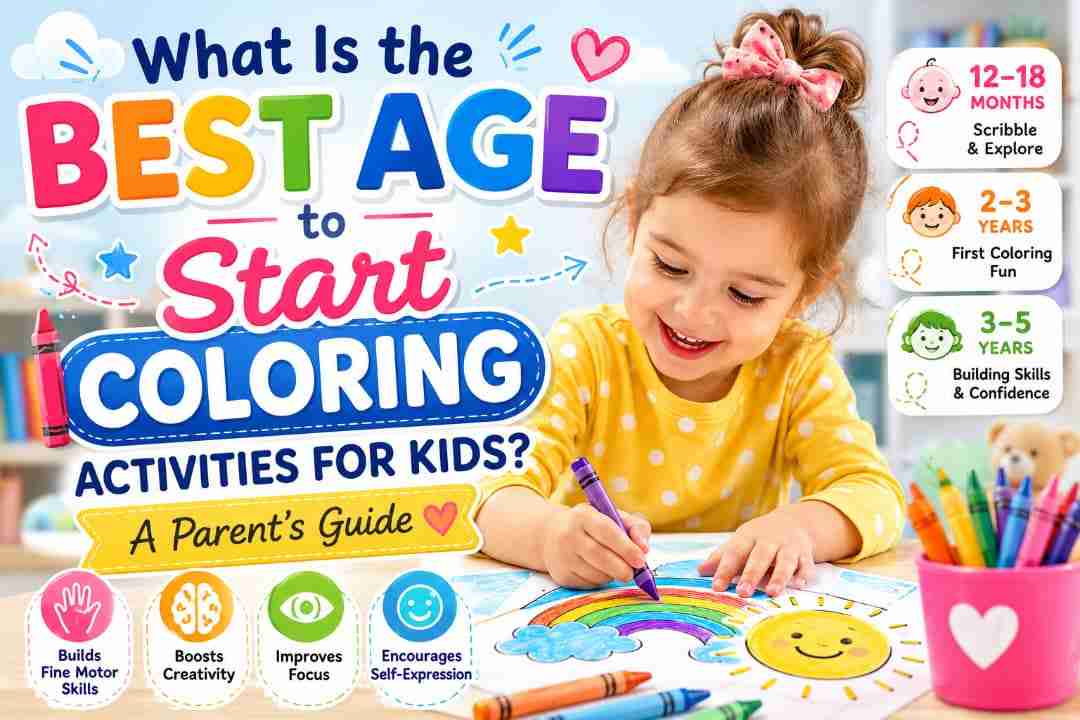
- Many children can begin scribbling and coloring as early as 12 to 18 months.
- At this stage, coloring is about exploration, not neatness or staying inside the lines.
- By 2 to 3 years old, kids usually enjoy more purposeful coloring with larger shapes and simple pages.
- Between 3 and 5 years old, hand control improves, so they can handle more detailed coloring activities.
- The best time to start is when your child shows interest, curiosity, and basic readiness, not just based on age alone.
Introduction
If you have ever handed a child a crayon and watched them attack the page with total joy, you already know that coloring is more than just a quiet activity. It is a way for kids to explore, build hand control, express themselves, and have fun all at once.
So, what is the best age to start coloring activities for kids?
The short answer is: sooner than many parents think. Most children can begin with simple scribbling and coloring experiences somewhere around 12 to 18 months.
Of course, that does not mean a toddler is ready for detailed coloring sheets or perfect strokes. At that age, coloring is really about discovery. They are learning how to hold a crayon, make marks on paper, and connect their movements to what they see.
If you are wondering whether your child is “too young” or “ready enough,” the good news is that coloring can grow with them. The activity changes as their skills develop, which is one of the reasons it is such a great early childhood pastime.
When Coloring Usually Begins
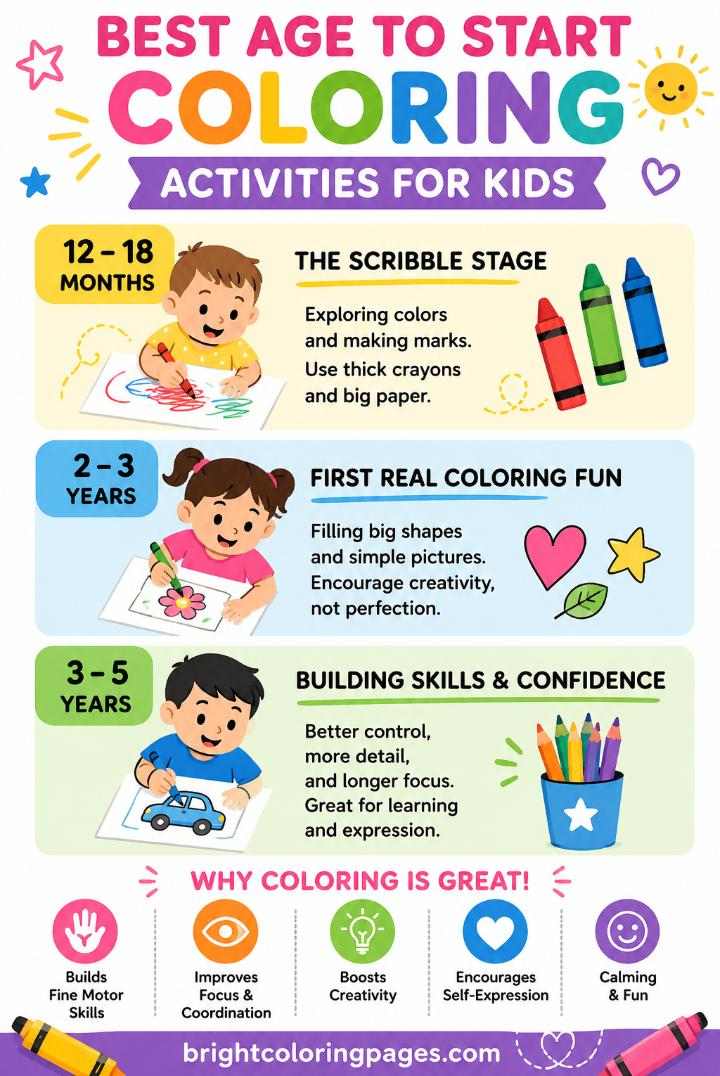
12 to 18 months: the scribble stage
This is often the first stage of coloring. A toddler may not color in a traditional sense, but they can absolutely enjoy making marks on paper. They may grasp a crayon with a whole fist, tap it, drag it, or make random lines and dots.
At this age, the goal is simple: let them explore. Large, washable crayons or thick markers are best. Big sheets of paper are helpful too, because toddlers usually do not have the control to stay within boundaries.
2 to 3 years: the first real coloring fun
By this stage, many children are ready for more intentional coloring. They may start trying to fill in large shapes, circles, or simple pictures. Their grip is still developing, but their interest often becomes stronger and more focused.
This is a lovely age to introduce coloring books with big images, animals, balloons, fruits, or other simple designs. They may not stay inside the lines, and that is perfectly normal. The point is practice, not perfection.
3 to 5 years: building control and confidence
This is when coloring becomes much more recognizable as a skill. Children usually have better fine motor control, stronger hand muscles, and more patience. They may begin choosing colors more deliberately and may enjoy spending longer periods on a page.
At this stage, coloring can support school readiness. It helps with pencil control, focus, and coordination. Some children may even start showing preferences for certain colors or styles, which makes the activity feel more personal and creative.
How to Tell Your Child Is Ready
Age matters, but readiness matters even more. A child might be younger than average and still love coloring, or older than average and only just getting interested. That is completely fine.
Here are a few signs your child may be ready to start:
- They can sit for a few minutes and focus on one activity.
- They show interest in crayons, pencils, or drawing.
- They can hold a crayon in some way, even if it is not the “right” grip yet.
- They enjoy making marks on paper or watching colors appear.
If your child only wants to chew the crayon, toss it on the floor, or use it as a drumstick, that is also part of the learning process. Young kids explore objects in very different ways before they use them as intended.
Best Coloring Tools by Age
The tools you choose can make a big difference.
For babies and toddlers, use:
- thick crayons
- jumbo washable markers
- large sheets of paper
- non-toxic art supplies
For preschoolers, you can gradually introduce:
- regular crayons
- chunky colored pencils
- simple coloring books
- sticker-and-color activities
A helpful tip: choose tools that are easy to grip. If a child struggles too much with the pencil itself, they may lose interest before they even get to the fun part.
Why Coloring Is So Helpful
Coloring may seem simple, but it supports several important skills.
It helps children build fine motor development, which means the small muscles in their hands and fingers grow stronger. It also supports hand-eye coordination, because kids must guide their hands while looking at the page.
Coloring can improve focus and patience, especially when children spend time finishing a picture. It also encourages creativity and self-expression, because there is no single “correct” way to choose colors.
And let us not forget the emotional side. Coloring can be calming. For some children, it is a quiet moment in a busy day, a way to settle down and enjoy something low-pressure.
Making Coloring Age-Appropriate and Fun
The best coloring activity is one that matches your child’s stage of development.
For younger children, keep it short and playful. Let them scribble, experiment, and switch colors often. You do not need to correct every mistake. In fact, if they want to color the sky green or the dog purple, that is part of the fun.
For older preschoolers, you can gently encourage more control by offering larger spaces first, then slowly moving to smaller, more detailed pages.
Here are a few ways to keep it engaging:
- sit and color with them sometimes
- ask what they are drawing or coloring
- let them choose their own colors
- praise effort, not perfection
- keep activities short if attention spans are still small
The goal is to make coloring feel enjoyable, not like a test.
What If My Child Is Not Interested Yet?
That is okay. Not every child will love coloring right away. Some children prefer building blocks, running around, puzzles, music, or pretend play. Interest often comes and goes.
You can still offer coloring materials casually without pressure. Leave crayons and paper nearby. Join in yourself and make it look fun. Sometimes children become interested simply because they see someone else enjoying it.
Conclusion
There is no single perfect age for every child to start coloring, but many children can begin as early as 12 to 18 months with simple scribbling.
As they grow, coloring becomes more structured, more creative, and more skill-building. The best time to start is when your child is curious and ready to explore.
Keep it fun, keep it simple, and let them progress at their own pace. That way, coloring becomes not just an activity, but a small and joyful part of their development.
FAQ
Yes. A 1-year-old can start with scribbling using large, washable crayons or markers. The focus should be on exploration and safe, simple materials.
No. Staying inside the lines comes much later. At first, the goal is to build confidence, coordination, and interest in the activity.
Thick, jumbo, non-toxic, washable crayons are best for toddlers because they are easier to hold and safer for little hands.
Very young children may only stay interested for a few minutes, and that is normal. As they get older, their attention span usually grows.
Yes. Coloring helps develop fine motor skills, focus, and hand control, all of which support early writing and classroom activities.
That is perfectly fine. Drawing and coloring both help children develop creativity and coordination. Some kids naturally prefer one over the other.