

- Coloring pages are a simple and relaxing way to keep kids busy during quiet time.
- They work well in the morning, after school, before bed, and during travel.
- Quiet time coloring can support focus, creativity, patience, and independent play.
- A small setup with coloring pages, crayons, and a calm space is often enough.
- Coloring should feel peaceful and pressure free so children can enjoy it at their own pace.
Introduction
If you have ever looked for a calm activity that keeps children engaged without making a lot of noise or mess, coloring pages are a great place to start.
They are easy to set up, affordable, and enjoyable for many ages. Best of all, they can turn an ordinary quiet moment into something peaceful and creative.
Quiet time can mean different things in different homes and classrooms. For some families, it is a short break in the middle of the day.
For others, it is a routine before bed or a few minutes of calm after school. No matter how you use it, coloring pages can fit beautifully into the routine.
The nice thing about coloring pages is that they do not require a lot of planning. A few pages, some crayons or colored pencils, and a comfortable spot are often all you need.
Children can choose what they want to color, sit down, and settle in at their own pace.
In this post, we will explore how to use coloring pages for quiet time activities in a simple and practical way.
We will look at when to use them, how to set them up, and how to make quiet time feel peaceful instead of forced. Ready to create a calmer routine? Let’s dive in.
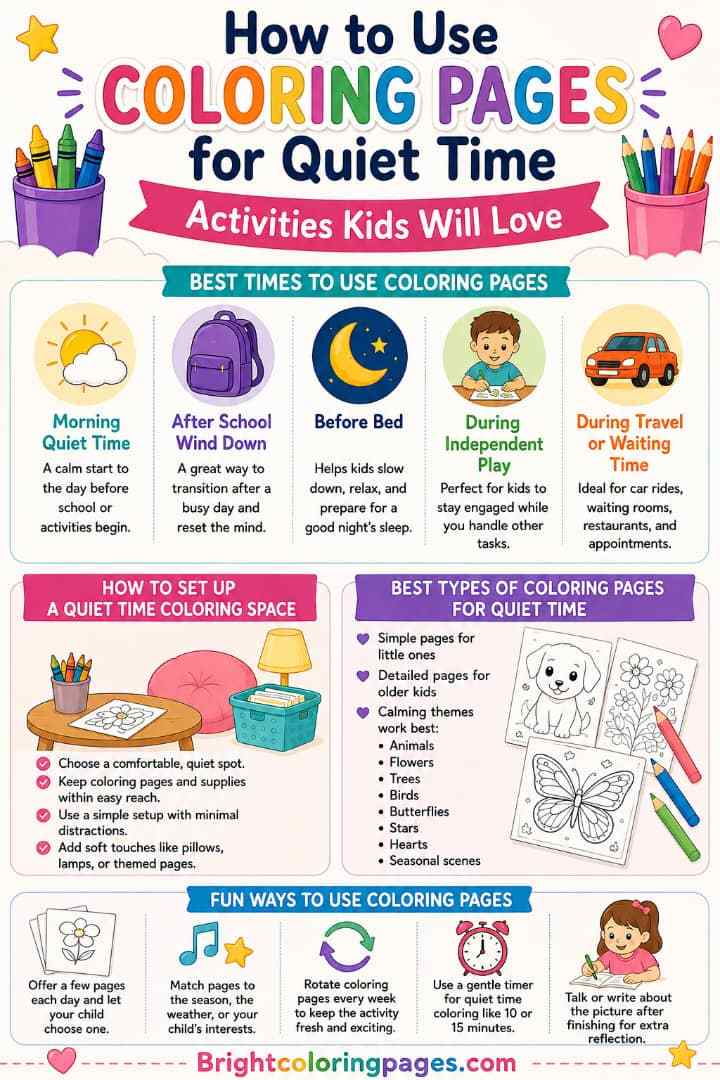
BOOKMARK : 25 Quiet Time Coloring Pages For Kids (Free Printable Download)
Why Coloring Pages Work So Well for Quiet Time
Coloring pages are a natural fit for quiet time because they give children something to do with their hands and minds without being too overwhelming.
The task is clear, the materials are simple, and the activity moves at a gentle pace.
Many children enjoy coloring because it feels comforting. They can pick their colors, focus on the page, and create something of their own.
That sense of control can be very calming, especially during transitions like after school or before bedtime.
Coloring also has the advantage of being flexible. Some children color for five minutes, while others stay busy for much longer.
Some like detailed pages, while others prefer simple drawings. That means you can adjust the activity to fit the moment, the child, and the amount of quiet time you have.
Best Times to Use Coloring Pages for Quiet Time
One of the easiest things about coloring pages is that they can fit into many parts of the day. Here are some of the best times to use them.
Morning Quiet Time
A short coloring session in the morning can help children ease into the day. It gives them a calm start before school, chores, or other activities begin.
A few minutes of coloring can be a gentle way to settle their energy and focus their attention.
After School Wind Down
After a busy day at school, many children need a little break before homework, dinner, or playtime. Coloring pages can be a great transition activity. They let kids rest their minds while still doing something creative and engaging.
Before Bed

Coloring pages can become part of a bedtime routine. Soft lighting, quiet music, and calming pages such as animals, flowers, or nature scenes can help children slow down before sleep.
The goal is not to keep them awake longer. The goal is to help them relax.
READ ALSO:15 Fun Group Coloring Activities for Classrooms That Build Teamwork and Creativity
During Independent Play
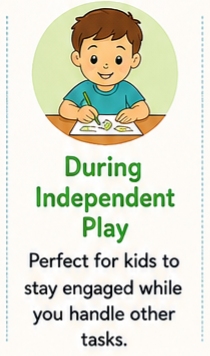
If you need a few minutes to work, cook, or handle tasks at home, coloring pages can be a helpful independent activity. Keep a basket of pages and supplies ready so children can use them on their own.
During Travel or Waiting Time

Coloring pages are also perfect for car rides, waiting rooms, restaurants, and long appointments. They are portable, easy to pack, and far less stressful than many other quiet activities.
How to Set Up a Quiet Time Coloring Space
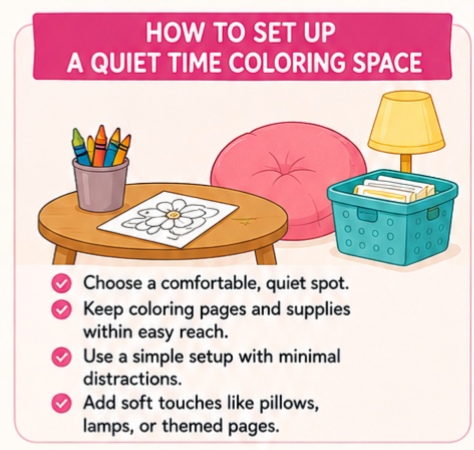
You do not need a big or fancy setup. A simple quiet time corner can be enough.
Start by choosing a comfortable spot with a table, floor mat, small desk, or lap tray. Then place the coloring pages somewhere easy to reach.
You can keep crayons, colored pencils, or washable markers in a container nearby.
It is also helpful to keep the space visually calm. Too many toys or distractions can make quiet time harder.
A simple setup often works best because it makes the coloring activity feel more focused and peaceful.
If you want to make the space extra inviting, you can add a soft pillow, a small lamp, or a basket of themed coloring pages. The more welcoming the spot feels, the more likely children are to use it.
FREE DOWNLOAD: 25 Simple Educational Coloring Pages For Kids (Free Printable Download)
Best Types of Coloring Pages for Quiet Time
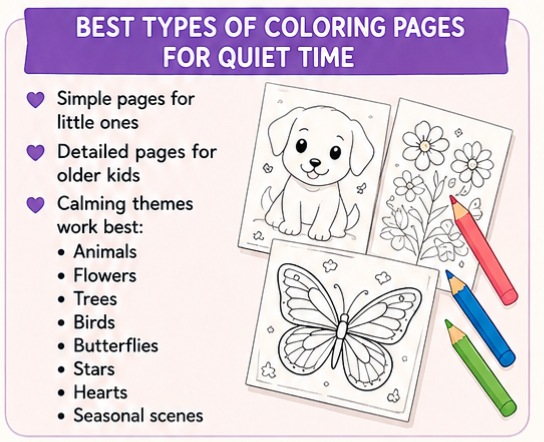
Not every coloring page creates the same mood. For quiet time, some designs work especially well.
Simple pages are great for younger children or shorter sessions. Large shapes, friendly animals, and easy pictures are usually a good choice.
More detailed pages can be better for older children who want to spend more time coloring. Mandalas, flowers, nature scenes, and patterned designs can help children slow down and focus.
Calming themes are often the best choice for quiet time. Think about pages with:
- animals
- flowers
- trees
- birds
- butterflies
- stars
- hearts
- seasonal scenes
These kinds of pictures feel peaceful and gentle, which matches the purpose of quiet time nicely.
Fun Ways to Use Coloring Pages During Quiet Time
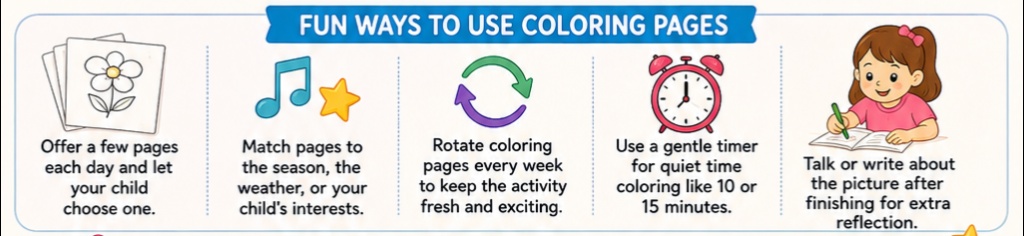
There are many simple ways to build coloring into a child’s routine without making it feel boring.
You can offer a few pages each day and let the child choose one. You can match the pages to the season, the weather, or the child’s current interests.
You can also pair coloring with soft music, storytelling, or a calm voice reading aloud.
Another nice idea is to rotate the coloring pages every week. That keeps the activity fresh and gives children something new to look forward to. You might use one theme for a few days, then switch to another.
If the child likes more structure, you can set a gentle timer for quiet time coloring.
For example, they might color for 10 or 15 minutes, then move on to their next activity. This can be especially helpful in a daily routine.
Older children can also write or talk about their picture after they finish. That turns coloring into a quiet reflective activity instead of just a task.
READ ALSO: How to Combine Coloring with Storytelling: A Fun, Creative Way to Bring Art to Life
Benefits of Quiet Time Coloring
Coloring pages are more than just a way to pass time. They can support important skills and habits too.
Quiet coloring can encourage relaxation. It gives children a break from noise, screens, and fast moving activities.
It can also improve focus because children need to pay attention to details, color choices, and the space on the page.
Coloring also supports fine motor skills. Holding crayons, controlling pencil pressure, and staying within shapes all help strengthen the small muscles in the hands.
Another big benefit is independent play. When children color on their own, they practice being comfortable with a calm solo activity. That is a useful skill at home, at school, and even during travel.
And of course, coloring sparks creativity. Children can choose unusual colors, create patterns, and make each page their own. That creative freedom can feel both fun and satisfying.
Tips for Making Quiet Time Coloring Successful
A few simple tips can make quiet time coloring much smoother.
First, keep supplies ready and easy to reach. If children have to search for crayons or paper every time, the activity is less likely to happen. A small basket or storage box can solve that problem quickly.
Second, let children choose their pages when possible. Choice gives them a sense of ownership and makes the activity feel more enjoyable.
Third, keep the mood relaxed. Quiet time is not about perfection. There is no need to rush, correct, or compare pictures. Children should feel free to color in their own style.
Fourth, use age appropriate pages. Younger children often need simpler pictures with larger spaces, while older children may enjoy more detailed designs.
Fifth, rotate your themes. Seasonal pages, animal pages, nature scenes, and holiday pictures can help keep the activity interesting over time.
Easy Quiet Time Coloring Ideas at Home
If you are looking for practical ways to begin, start small.
You can keep a quiet time box filled with coloring pages, crayons, colored pencils, and a few stickers. You can place it in the living room, bedroom, or play area so it is easy to use whenever needed.
You can also make coloring part of a daily rhythm. For example, children might color after lunch, after school, or before bed. The more regular the routine, the easier it becomes for them to expect and enjoy it.
Another idea is to create a soft calm corner with coloring pages as one of the main choices. This can be a wonderful place for children to rest, reset, and enjoy a peaceful break.
FREE PRINTABLE: 25 Free Alphabet Coloring Pages for Preschool Kids (Free Printable Download)
The Bottom Line
Coloring pages are one of the easiest and most effective ways to use quiet time well. They are simple to set up, easy to enjoy, and flexible enough for home, classroom, or travel use.
Whether you use them in the morning, after school, before bed, or during independent play, they can help children slow down and focus in a peaceful way.
The best part is that quiet time coloring does not need to be fancy. A few pages and some crayons can do a lot.
So the next time you need a calm activity that feels gentle and creative, try coloring pages. They may become one of your favorite quiet time tools.
FAQs
It depends on the child and the routine. Some children color for just a few minutes, while others enjoy 15 to 30 minutes. The best length is the one that feels calm and manageable.
Quiet time Calming pages such as animals, flowers, nature scenes, and simple patterns usually work very well. Older children may also enjoy more detailed designs like mandalas.
Yes, many children find coloring relaxing. It gives them a quiet, focused activity that can help them settle down and unwind.
Yes, as long as the pages are simple and the expectations are low. Toddlers may only color for a short time, but that is perfectly fine.
You only need coloring pages and something to color with, such as crayons, colored pencils, or washable markers. A simple container or basket can help keep everything organized.